


Indigenous Knowledge in Transformation
Northeast India
Edited by Tiatoshi Jamir & Johannes Müller | Forthcoming
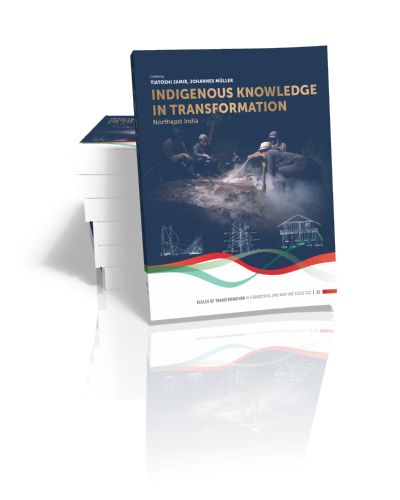
Indigenous Knowledge in Transformation
Northeast India
Edited by Tiatoshi Jamir & Johannes Müller | Forthcoming
Paperback ISBN: 9789464271898 | Hardback ISBN: 9789464271904 | Imprint: Sidestone Press Academics | Format: 210x280mm | ca. 300 pp. | Scales of Transformation 26 | Series: Scales of Transformation | Language: English | 28 illus. (bw) | 161 illus. (fc) | Keywords: indigenous knowledge; archaeology; ethnoarchaeology; Northeast India; traditional practices | download cover | DOI: 10.59641/8y5797bk | CC-license: CC BY 4.0
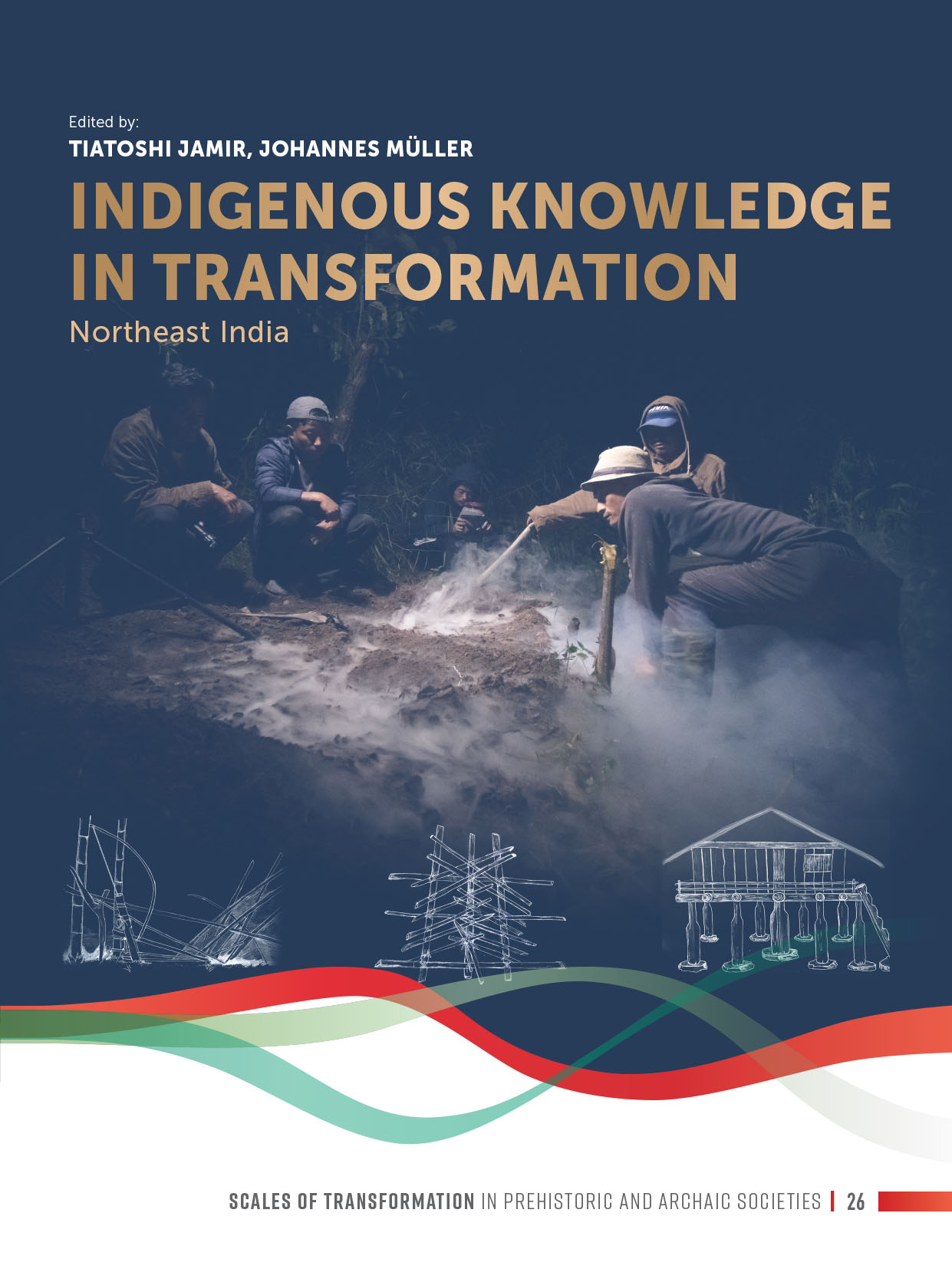
Publication date: 16-03-2027
-
Digital & Online access
Digital/Online version not (yet) available
-
Buy via Sidestone (EU & UK)
Get €5.00 discount on forthcoming books by using coupon code "PRE-ORDER" in your shopping cart!
-
Buy via our Distributors (WORLD)
For non-EU or UK destinations you can buy our books via our international distributors. Although prices may vary this will ensure speedy delivery and reduction in shipping costs or import tax. But you can also order with us directly via the module above.
For UK & other International destinations
For USA/Canada & other International destinations
-
Bookinfo
Paperback ISBN: 9789464271898 | Hardback ISBN: 9789464271904 | Imprint: Sidestone Press Academics | Format: 210x280mm | ca. 300 pp. | Scales of Transformation 26 | Series: Scales of Transformation | Language: English | 28 illus. (bw) | 161 illus. (fc) | Keywords: indigenous knowledge; archaeology; ethnoarchaeology; Northeast India; traditional practices | download cover | DOI: 10.59641/8y5797bk | CC-license: CC BY 4.0
Publication date: 16-03-2027

We will plant a tree for each order containing a paperback or hardback book via OneTreePlanted.org.
In both archaeology and anthropology, the documentation of various techniques, economic interrelations, belief systems, and the handling and perception of the environment is of fundamental importance. In particular, knowledge of non-industrial contexts that do not conform to market-economic rules provides a source of information that can be crucial for shaping our world today. In many cases, the bearers of such knowledge are highly diverse societies that have not yet been fully integrated into the market economy.
In Northeast India especially, we encounter numerous and, in some cases, very diverse communities that carry with them slowly vanishing knowledge of environmental interaction, specific craft techniques, nutritional strategies, or techniques for landscape conservation. Furthermore, various archaeological evidence exists which, when brought together, tells of the multifaceted and far-reaching history of human settlement in this region. Interestingly, these are areas with arguably the highest biodiversity and greatest linguistic diversity in the world. Both point to the existence of an immensely valuable resilience against developments that lead to a reduction in knowledge about sustainable interaction with nature and one’s own autonomy.
These topics were highlighted in the workshop ‘Indigenous Knowledge in Transformation: Northeast India’ that brought together many scholars from Northeast India. Most of the papers from the workshop are published in this volume.
Preface by the series editors
In Memoriam – Ditamulü Vasa
Preface by the editors
INTRODUCTION
Indigenous Knowledge in transformation: Northeast India
Tiatoshi Jamir, Johannes Müller
ARCHITECTURE
Exploring traditional techniques of Ao Naga house architecture
Mepusangba
House on a rock: appreciating and acknowledging Rong architecture
Charisma K. Lepcha, Rongnyoo Lepcha
ECONOMIC ACTIVITIES
Material functions of mineral clay soils in indigenous Naga metallurgy
Tiatemjen Tzudir
Women and weaving: preservation of intangible cultural heritage in Mizoram
Hmingthanzuali
Traditional knowledge system of dyeing yarns associated with Meitei textiles
Potshangbam Binodini Devi
The dying tradition of salt-making in Manipur
Rajkumari Barbina
SUBSISTENCE
Dhan kheti to Sanskriti: Indigenous Knowledge associated with rice in Northeast India
Manjil Hazarika
Material culture and technological perspective on procurement and consumption of wild rice in Manipur (India)
Robinson Huidrom, Huidrom Suraj Singh
Indigenous Knowledge associated with the harvest of the Asian Giant Hornet among the indigenous communities of Northeast India
Femi Ezhthupallickal Benny, Thejavikho Chase, Dharma Rajan Priyadarsanan
Traditional hunting and trapping methods and practices among the Ao tribes of Nagaland
Yabangri Changkiri, †Ditamulü Vasa
MEDICINAL KNOWLEDGE
Animal and human relationships: traditional zoo-therapy practices among the Dimasa society of Assam
Tilok Thakuria, Atashi Maitra
Indigenous Knowledge in Arunachal Pradesh
Roger Blench
Glimpses of traditional indigenous technology practices of Nagas in India
Sapu Changkija
CONSERVATION AND BELIEFS
Sacred groves and community protected forests in Khasi and Jaintia Hills, Meghalaya, India: a case study of few variants in Indigenous Knowledge Practices
Hiambok J Syiemlieh
Ecology in tradition: exploring the cultural context of the sacred groves in the Khasi-Jaintia hills of Meghalaya
Marco Mitri
Relevance of the belief system of the Galo in conserving biodiversity in the Eastern Himalayas
Bomchak Riba
‘Water’ (Twi/Toi) in the Indigenous Knowledge, culture and religious practices of Tripura
Jonomti Reang, Sukhendu Debbarma
CONCLUSION
Concluding remarks and future perspectives
Tiatoshi Jamir, Johannes Müller
List of contributors
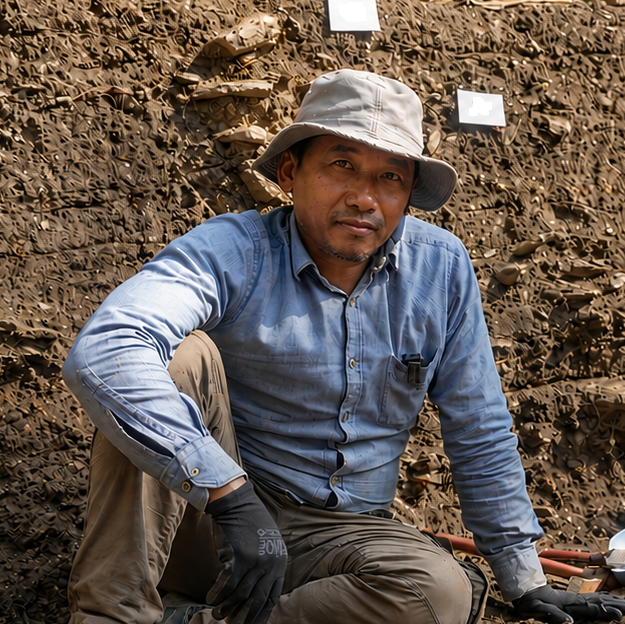
Prof. dr. Tiatoshi Jamir
Tiatoshi Jamir (PhD, Deccan College, Pune, 2005) is a Professor of Archaeology in the Department of History & Archaeology, Nagaland University whose deep interests situate around Northeast Indian prehistory, Naga monumentality, and explores ways of learning and knowing the human story of Northeast India’s past, particularly Nagaland, from an Indigenous lens.

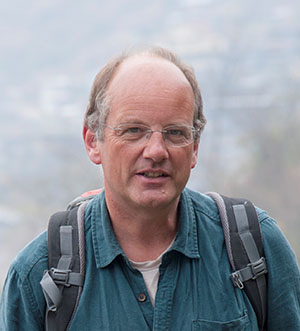
Prof. dr. Johannes Müller
Johannes Müller (PhD, University of Freiburg, 1990) is a Professor and Director of the Institute for Prehistoric and Protohistoric Archaeology at Kiel University, Germany. He is the founding director of the Johanna Mestorf Academy, Speaker of the Collaborative Research Centre “Scales of Transformation: Human-environmental Interaction in Prehistoric and Archaic Societies” and of the Excellence Cluster “ROOTS – Social, Environmental, and Cultural Connectivity in Past Societies”.
Jamir, T., & Müller, J. (Eds.). (in press). Indigenous Knowledge in Transformation. Northeast India. Scales of Transformation 26. Sidestone Press. https://doi.org/10.59641/8y5797bk
Abstract:
In both archaeology and anthropology, the documentation of various techniques, economic interrelations, belief systems, and the handling and perception of the environment is of fundamental importance. In particular, knowledge of non-industrial contexts that do not conform to market-economic rules provides a source of information that can be crucial for shaping our world today. In many cases, the bearers of such knowledge are highly diverse societies that have not yet been fully integrated into the market economy.
In Northeast India especially, we encounter numerous and, in some cases, very diverse communities that carry with them slowly vanishing knowledge of environmental interaction, specific craft techniques, nutritional strategies, or techniques for landscape conservation. Furthermore, various archaeological evidence exists which, when brought together, tells of the multifaceted and far-reaching history of human settlement in this region. Interestingly, these are areas with arguably the highest biodiversity and greatest linguistic diversity in the world. Both point to the existence of an immensely valuable resilience against developments that lead to a reduction in knowledge about sustainable interaction with nature and one’s own autonomy.
These topics were highlighted in the workshop ‘Indigenous Knowledge in Transformation: Northeast India’ that brought together many scholars from Northeast India. Most of the papers from the workshop are published in this volume.
Contents
Preface by the series editors
In Memoriam – Ditamulü Vasa
Preface by the editors
INTRODUCTION
Indigenous Knowledge in transformation: Northeast India
Tiatoshi Jamir, Johannes Müller
ARCHITECTURE
Exploring traditional techniques of Ao Naga house architecture
Mepusangba
House on a rock: appreciating and acknowledging Rong architecture
Charisma K. Lepcha, Rongnyoo Lepcha
ECONOMIC ACTIVITIES
Material functions of mineral clay soils in indigenous Naga metallurgy
Tiatemjen Tzudir
Women and weaving: preservation of intangible cultural heritage in Mizoram
Hmingthanzuali
Traditional knowledge system of dyeing yarns associated with Meitei textiles
Potshangbam Binodini Devi
The dying tradition of salt-making in Manipur
Rajkumari Barbina
SUBSISTENCE
Dhan kheti to Sanskriti: Indigenous Knowledge associated with rice in Northeast India
Manjil Hazarika
Material culture and technological perspective on procurement and consumption of wild rice in Manipur (India)
Robinson Huidrom, Huidrom Suraj Singh
Indigenous Knowledge associated with the harvest of the Asian Giant Hornet among the indigenous communities of Northeast India
Femi Ezhthupallickal Benny, Thejavikho Chase, Dharma Rajan Priyadarsanan
Traditional hunting and trapping methods and practices among the Ao tribes of Nagaland
Yabangri Changkiri, †Ditamulü Vasa
MEDICINAL KNOWLEDGE
Animal and human relationships: traditional zoo-therapy practices among the Dimasa society of Assam
Tilok Thakuria, Atashi Maitra
Indigenous Knowledge in Arunachal Pradesh
Roger Blench
Glimpses of traditional indigenous technology practices of Nagas in India
Sapu Changkija
CONSERVATION AND BELIEFS
Sacred groves and community protected forests in Khasi and Jaintia Hills, Meghalaya, India: a case study of few variants in Indigenous Knowledge Practices
Hiambok J Syiemlieh
Ecology in tradition: exploring the cultural context of the sacred groves in the Khasi-Jaintia hills of Meghalaya
Marco Mitri
Relevance of the belief system of the Galo in conserving biodiversity in the Eastern Himalayas
Bomchak Riba
‘Water’ (Twi/Toi) in the Indigenous Knowledge, culture and religious practices of Tripura
Jonomti Reang, Sukhendu Debbarma
CONCLUSION
Concluding remarks and future perspectives
Tiatoshi Jamir, Johannes Müller
List of contributors
Prof. dr. Tiatoshi Jamir
Tiatoshi Jamir (PhD, Deccan College, Pune, 2005) is a Professor of Archaeology in the Department of History & Archaeology, Nagaland University whose deep interests situate around Northeast Indian prehistory, Naga monumentality, and explores ways of learning and knowing the human story of Northeast India’s past, particularly Nagaland, from an Indigenous lens.
Prof. dr. Johannes Müller
Johannes Müller (PhD, University of Freiburg, 1990) is a Professor and Director of the Institute for Prehistoric and Protohistoric Archaeology at Kiel University, Germany. He is the founding director of the Johanna Mestorf Academy, Speaker of the Collaborative Research Centre “Scales of Transformation: Human-environmental Interaction in Prehistoric and Archaic Societies” and of the Excellence Cluster “ROOTS – Social, Environmental, and Cultural Connectivity in Past Societies”.
-
Digital & Online access
Digital/Online version not (yet) available
-
Buy via Sidestone (EU & UK)
Get €5.00 discount on forthcoming books by using coupon code "PRE-ORDER" in your shopping cart!
-
Buy via our Distributors (WORLD)
For non-EU or UK destinations you can buy our books via our international distributors. Although prices may vary this will ensure speedy delivery and reduction in shipping costs or import tax. But you can also order with us directly via the module above.
For UK & other International destinations
For USA/Canada & other International destinations
- Browse all books by subject
-
Search all books
We will plant a tree for each order containing a paperback or hardback book via OneTreePlanted.org.
You might also like:



© 2026 Sidestone Press KvK nr. 28114891 Privacy policy Sidestone Newsletter Terms and Conditions (Dutch)