


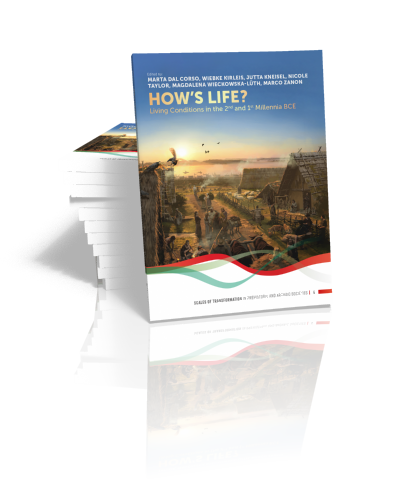
How's Life?
Living Conditions in the 2nd and 1st Millennia BCE
Edited by Marta Dal Corso, Wiebke Kirleis, Jutta Kneisel, Nicole Taylor, Magdalena Wieckowska-Lüth, Marco Zanon | 2019
The Bronze Age and Early Iron Age saw many developments in metalworking, social structure, food production, nutrition, and diet. At the same time, networks in Europe intensified and human impact on the environment changed in…

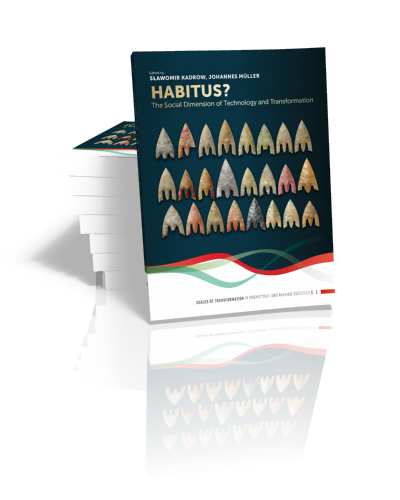
Habitus?
The Social Dimension of Technology and Transformation
Edited by Sławomir Kadrow & Johannes Müller | 2019
The problem of the social dimension of technology and transformation seen in the perspective of the habitus has been repeatedly undertaken in various works. However, the complexity of these phenomena causes subsequent attempts to be…
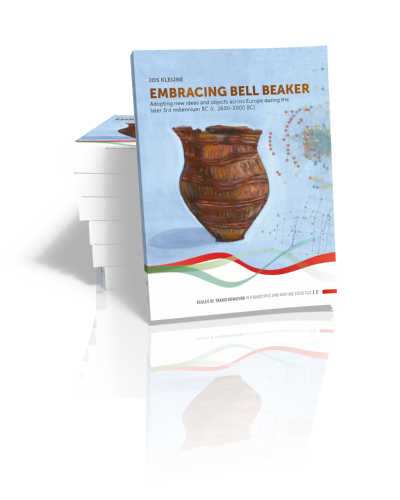
Embracing Bell Beaker
Adopting new ideas and objects across Europe during the later 3rd millennium BC (c. 2600-2000 BC)
Jos Kleijne | 2019
This book deals with the question how communities across Europe during the later 3rd millennium BC adopt and transform the Bell Beaker phenomenon differently. By looking at these processes of change from the perspective of…
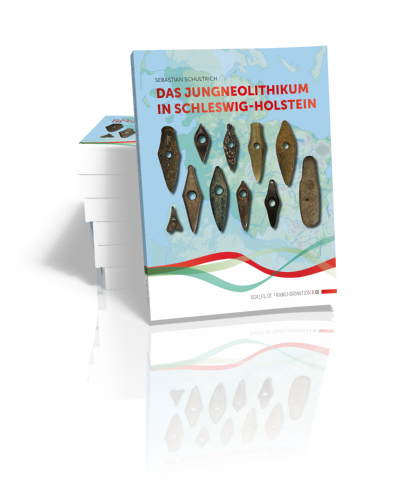
Das Jungneolithikum in Schleswig-Holstein
Sebastian Schultrich | 2018
Dieses Buch bietet eine umfassende Studie zum Jungneolithikum (JN, auch Einzelgrabkultur, ca. 2850 – 2250 v. Chr.) in Schleswig-Holstein. Neben einer detaillierten Darstellung aller Funde und Befunde dieser Epoche, liegt ein besonderer Fokus auf Analysen…
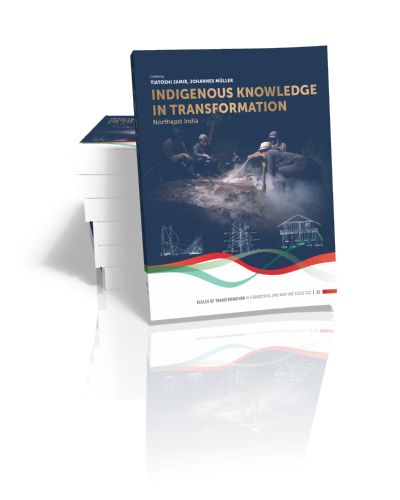
Indigenous Knowledge in Transformation
Northeast India
Edited by Tiatoshi Jamir & Johannes Müller | Forthcoming
In both archaeology and anthropology, the documentation of various techniques, economic interrelations, belief systems, and the handling and perception of the environment is of fundamental importance. In particular, knowledge of non-industrial contexts that do not…
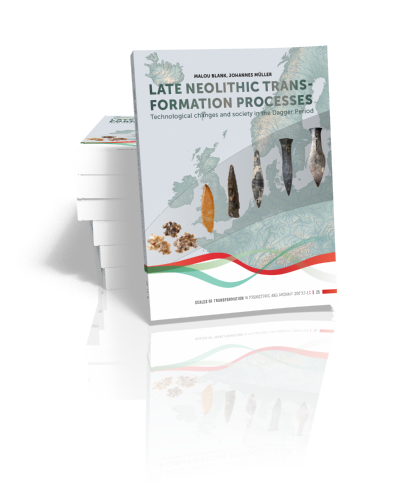
Late Neolithic transformation processes
Technological changes and society in the Dagger period
Edited by Malou Blank & Johannes Müller | Forthcoming
Around 2200–1700 BCE, Scandinavia and Central Europe were shaped by significant socio-environmental transformations. Between central Germany and northern Norway, Nordic flint daggers symbolise these changes—across different societies and under varying environmental conditions. For the first…
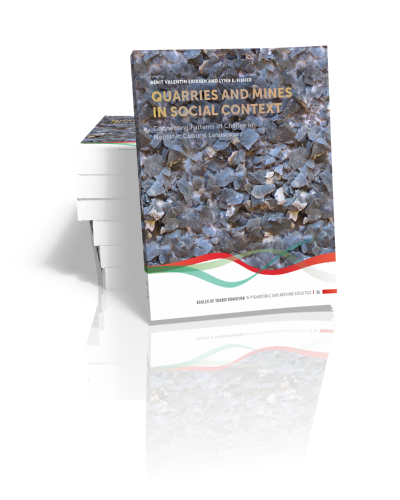
Quarries and mines in social context
Connecting patterns of change in Neolithic cultural landscapes
Edited by Berit Valentin Eriksen & Lynn E. Fisher | Forthcoming
Flint mines and quarries are a widespread phenomenon in the European Neolithic, but are difficult to characterise and to connect to broader sociocultural developments due to challenges of recognition and dating, and to a great…
Search results for Scales of Transformation
:
How's Life?
Living Conditions in the 2nd and 1st Millennia BCE
Edited by Marta Dal Corso, Wiebke Kirleis, Jutta Kneisel, Nicole Taylor, Magdalena Wieckowska-Lüth, Marco Zanon | 2019
The Bronze Age and Early Iron Age saw many developments in metalworking, social structure, food production, nutrition, and diet. At the same time, networks in Europe intensified and human impact on the environment changed in…
Habitus?
The Social Dimension of Technology and Transformation
Edited by Sławomir Kadrow & Johannes Müller | 2019
The problem of the social dimension of technology and transformation seen in the perspective of the habitus has been repeatedly undertaken in various works. However, the complexity of these phenomena causes subsequent attempts to be…
Embracing Bell Beaker
Adopting new ideas and objects across Europe during the later 3rd millennium BC (c. 2600-2000 BC)
Jos Kleijne | 2019
This book deals with the question how communities across Europe during the later 3rd millennium BC adopt and transform the Bell Beaker phenomenon differently. By looking at these processes of change from the perspective of…
Das Jungneolithikum in Schleswig-Holstein
Sebastian Schultrich | 2018
Dieses Buch bietet eine umfassende Studie zum Jungneolithikum (JN, auch Einzelgrabkultur, ca. 2850 – 2250 v. Chr.) in Schleswig-Holstein. Neben einer detaillierten Darstellung aller Funde und Befunde dieser Epoche, liegt ein besonderer Fokus auf Analysen…
Indigenous Knowledge in Transformation
Northeast India
Edited by Tiatoshi Jamir & Johannes Müller | Forthcoming
In both archaeology and anthropology, the documentation of various techniques, economic interrelations, belief systems, and the handling and perception of the environment is of fundamental importance. In particular, knowledge of non-industrial contexts that do not…
Late Neolithic transformation processes
Technological changes and society in the Dagger period
Edited by Malou Blank & Johannes Müller | Forthcoming
Around 2200–1700 BCE, Scandinavia and Central Europe were shaped by significant socio-environmental transformations. Between central Germany and northern Norway, Nordic flint daggers symbolise these changes—across different societies and under varying environmental conditions. For the first…
Quarries and mines in social context
Connecting patterns of change in Neolithic cultural landscapes
Edited by Berit Valentin Eriksen & Lynn E. Fisher | Forthcoming
Flint mines and quarries are a widespread phenomenon in the European Neolithic, but are difficult to characterise and to connect to broader sociocultural developments due to challenges of recognition and dating, and to a great…
Browse by subject