


Royalty and Ritual
The landscape of power in early medieval Scotland and Europe
Edited by Alexandra Sanmark, Mark A. Hall, Jane Geddes & Oisín Plumb | 2026
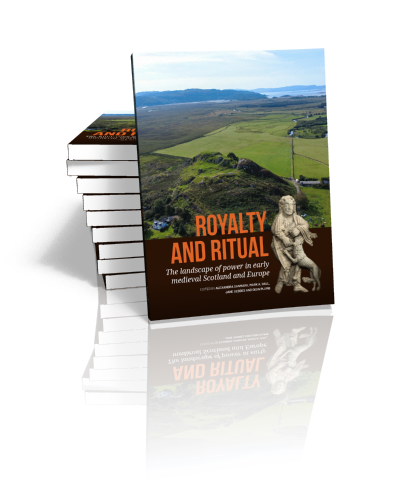
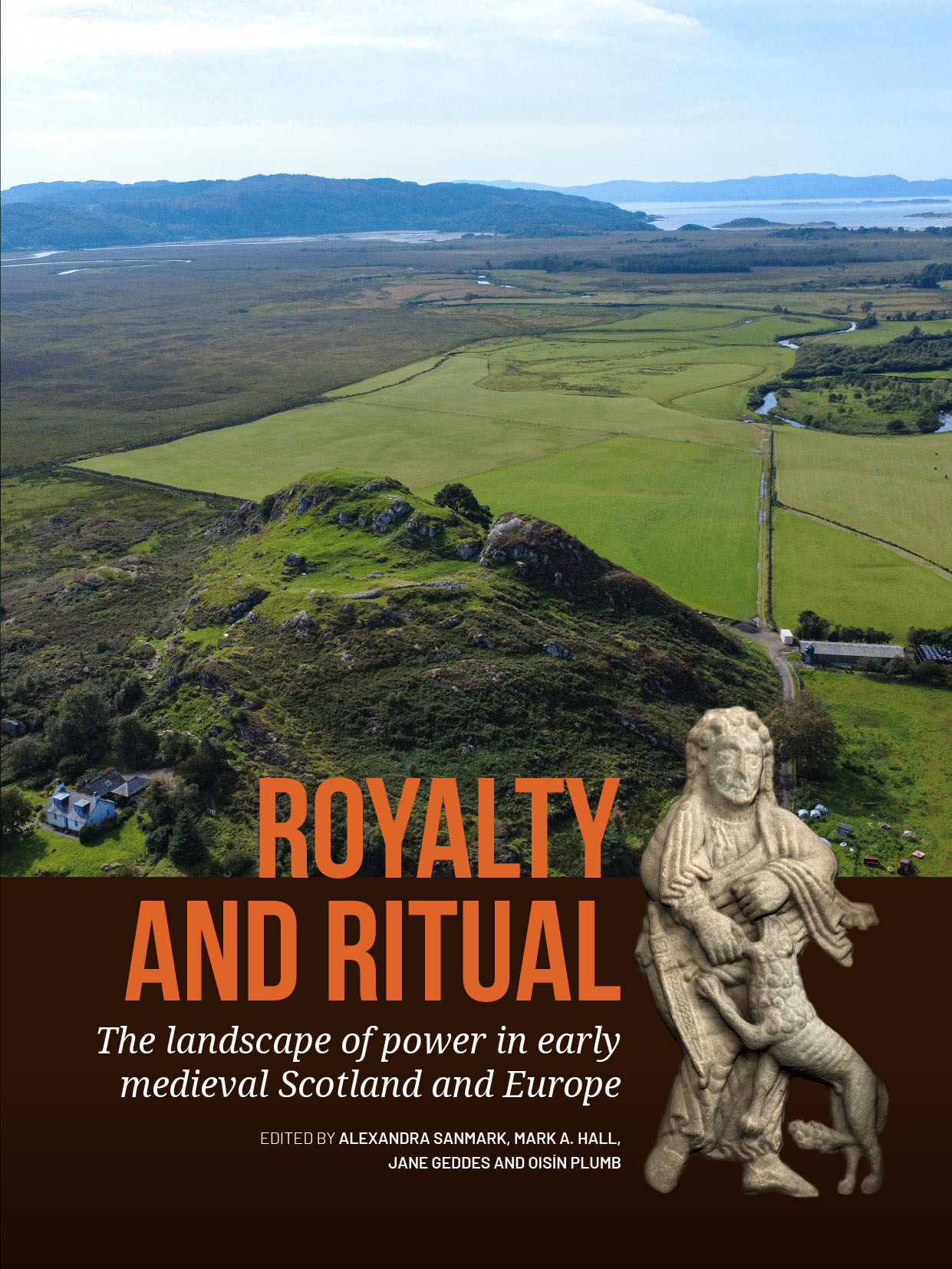
Royalty and Ritual
The landscape of power in early medieval Scotland and Europe
Edited by Alexandra Sanmark, Mark A. Hall, Jane Geddes & Oisín Plumb | 2026
Paperback ISBN: 9789464271539 | Hardback ISBN: 9789464271546 | Imprint: Sidestone Press | Format: 210x280mm | 204 pp. | Language: English | 23 illus. (bw) | 54 illus. (fc) | Keywords: kingship; early medieval Scotland; sacrality; folklore; Europe | download cover | DOI: 10.59641/p0s6m7n8o9 | CC-license: CC BY-NC-ND 4.0
Read online 566 times
- Digital & Online access
-
Buy via Sidestone (EU & UK)
-
Buy via our Distributors (WORLD)
For non-EU or UK destinations you can buy our books via our international distributors. Although prices may vary this will ensure speedy delivery and reduction in shipping costs or import tax. But you can also order with us directly via the module above.
UK international distributor
USA international distributor
-
Bookinfo
Paperback ISBN: 9789464271539 | Hardback ISBN: 9789464271546 | Imprint: Sidestone Press | Format: 210x280mm | 204 pp. | Language: English | 23 illus. (bw) | 54 illus. (fc) | Keywords: kingship; early medieval Scotland; sacrality; folklore; Europe | download cover | DOI: 10.59641/p0s6m7n8o9 | CC-license: CC BY-NC-ND 4.0
Read online 566 times
We will plant a tree for each order containing a paperback or hardback book via OneTreePlanted.org.
Medieval kings and kingship, and the rituals that define them, continue to captivate both scholars and the wider public. This interdisciplinary volume offers a Europe-wide perspective on early medieval kingship, with a particular focus on Scotland.
What types of royal sites existed in the early medieval period in Scotland, and how did they vary regionally? Can we trace these sites in placenames? What rituals and other activities were associated with these sites, and what purposes did they serve? These and other questions are explored in the papers gathered together in this interdisciplinary volume.
Drawing together experts in archaeology, history, placenames, folklore, poetry, and art history, the volume unpacks the story of early medieval kingship in Scotland against a European backdrop and across multiple scales, from multi-site regions and the mobile exercise of kingship, to single-site landscapes, analysis of significant objects, and the memorialisation of stories through tradition.
Framed by recent archaeological excavations in Scotland, Wales, Ireland, England, and Scandinavia, this book presents a rich and innovative approach to the study of kingship in the early medieval period.
Introduction
Mark A. Hall, Alexandra Sanmark, Jane Geddes and Oisín Plumb
I: Scotland from pagan rulers to Christian kings
Powerful Place(s): elite power and the central place complexes of early medieval northern Britain
Gordon Noble
Identifying the development of local power centres in Pictland and Alba
Nick Evans
Lords of The Dance: materialising sacral leadership in early medieval Scotland
Mark A. Hall
The St Andrews Sarcophagus: shrine for an anointed king?
Jane Geddes
Characterising early medieval Royal Sites: Scotland in an Insular context
Ewan Campbell
Kings’ feet or the marks of angels? Footprints in stone revisited
Thomas Owen Clancy
Memories of Pictish secular power in places of Christian ritual
Oisín Plumb
II: Aspects of kingship in Scotland’s Insular and European neighbours
Fæsted-Harreby-Sønder Hygum: a power centre in southern Jutland
Lars Grundvad
Kings’ Seats or Royal Residences? Thoughts about Scandinavian ‘central places’
Jan-Henrik Fallgren
Local communities and the rise of polities in the Tyne-Forth region (c 400–850 AD)
Celia Orsini
The visual prominence and accessibility of the early medieval great hall complex at Yeavering, Northumberland, England
Brian Buchanan, Sarah Semple, Tudor Skinner
Royal nunneries as centres of power: a comparison of Anglo-Saxon and Pictish evidence
Barbara Yorke
The importance of St Michael’s Workington within the 10th-century Hiberno-Scandinavian polity
Caroline Paterson
Kings on the move: the case of the Viking Great Army
Shane McLeod
Origins of the Tøglag metre and the royal power rituals at the court of Knútr inn Ríki
Jakub Morawiec
Royal uses of ‘Sites of Memory’ in the Viking Age and modern Norway
Karl Christian Alvestad and Anne Irene Riisøy
The Stone of Scone
David H. Caldwell
Royal power and folklore in early medieval Wales and the microcosm of Llangorse
Mark Redknap
Prof. Dr Alexandra Sanmark
Alexandra Sanmark is Professor of Medieval Archaeology at the Institute for Northern Studies, University of the Highlands and Islands. Her research interests include Iron Age Scandinavia, in particular the Viking Age and the expansion into the North Atlantic. She also has a strong interest in Viking Age religion, law and assembly as well as the Christianisation of northwest Europe. She has recently led a number of research projects, such as the AHRC/DFG-funded The Norse and the Sea, which focuses on Viking Age settlement and maritime connections in Scotland and the Royal Society funded Communications in Norse Orkney.

Dr Mark A. Hall
Dr Mark A Hall is an archaeologist and museum curator based at Perth Museum (Culture Perth & Kinross), Perth, Scotland. He has recently been the lead researcher for the new Perth Museum project, which opened in March 2024. His research interests principally span the medieval centuries from the Late Antique to the 16th century, with a focus on medieval material culture, including board and dice games, the cult of saints and supernatural engagement, cultural biography and re-imagining the Middle Ages. He has published widely and internationally in journals and books.
Prof. (em.) Dr Jane Geddes
Jane Geddes is emerita Professor of Art History from the University of Aberdeen. She specialises in medieval art of all media, and architectural history.
Dr Oisín Plumb
Oisín Plumb is a lecturer at the Institute for Northern Studies, University of the Highlands and Islands. His research focuses on Early medieval Northern Britain and Ireland. Particular issues of interest include the formation of local and national identities in the early medieval period as well as maps and the understanding of the earth’s lands in the Early Middle Ages.
Sanmark, A., Hall, M. A., Geddes, J., & Plumb, O. (Eds.). (2026). Royalty and Ritual. The landscape of power in early medieval Scotland and Europe. Sidestone Press. https://doi.org/10.59641/p0s6m7n8o9
Abstract:
Medieval kings and kingship, and the rituals that define them, continue to captivate both scholars and the wider public. This interdisciplinary volume offers a Europe-wide perspective on early medieval kingship, with a particular focus on Scotland.
What types of royal sites existed in the early medieval period in Scotland, and how did they vary regionally? Can we trace these sites in placenames? What rituals and other activities were associated with these sites, and what purposes did they serve? These and other questions are explored in the papers gathered together in this interdisciplinary volume.
Drawing together experts in archaeology, history, placenames, folklore, poetry, and art history, the volume unpacks the story of early medieval kingship in Scotland against a European backdrop and across multiple scales, from multi-site regions and the mobile exercise of kingship, to single-site landscapes, analysis of significant objects, and the memorialisation of stories through tradition.
Framed by recent archaeological excavations in Scotland, Wales, Ireland, England, and Scandinavia, this book presents a rich and innovative approach to the study of kingship in the early medieval period.
Contents
Introduction
Mark A. Hall, Alexandra Sanmark, Jane Geddes and Oisín Plumb
I: Scotland from pagan rulers to Christian kings
Powerful Place(s): elite power and the central place complexes of early medieval northern Britain
Gordon Noble
Identifying the development of local power centres in Pictland and Alba
Nick Evans
Lords of The Dance: materialising sacral leadership in early medieval Scotland
Mark A. Hall
The St Andrews Sarcophagus: shrine for an anointed king?
Jane Geddes
Characterising early medieval Royal Sites: Scotland in an Insular context
Ewan Campbell
Kings’ feet or the marks of angels? Footprints in stone revisited
Thomas Owen Clancy
Memories of Pictish secular power in places of Christian ritual
Oisín Plumb
II: Aspects of kingship in Scotland’s Insular and European neighbours
Fæsted-Harreby-Sønder Hygum: a power centre in southern Jutland
Lars Grundvad
Kings’ Seats or Royal Residences? Thoughts about Scandinavian ‘central places’
Jan-Henrik Fallgren
Local communities and the rise of polities in the Tyne-Forth region (c 400–850 AD)
Celia Orsini
The visual prominence and accessibility of the early medieval great hall complex at Yeavering, Northumberland, England
Brian Buchanan, Sarah Semple, Tudor Skinner
Royal nunneries as centres of power: a comparison of Anglo-Saxon and Pictish evidence
Barbara Yorke
The importance of St Michael’s Workington within the 10th-century Hiberno-Scandinavian polity
Caroline Paterson
Kings on the move: the case of the Viking Great Army
Shane McLeod
Origins of the Tøglag metre and the royal power rituals at the court of Knútr inn Ríki
Jakub Morawiec
Royal uses of ‘Sites of Memory’ in the Viking Age and modern Norway
Karl Christian Alvestad and Anne Irene Riisøy
The Stone of Scone
David H. Caldwell
Royal power and folklore in early medieval Wales and the microcosm of Llangorse
Mark Redknap
Prof. Dr Alexandra Sanmark
Alexandra Sanmark is Professor of Medieval Archaeology at the Institute for Northern Studies, University of the Highlands and Islands. Her research interests include Iron Age Scandinavia, in particular the Viking Age and the expansion into the North Atlantic. She also has a strong interest in Viking Age religion, law and assembly as well as the Christianisation of northwest Europe. She has recently led a number of research projects, such as the AHRC/DFG-funded The Norse and the Sea, which focuses on Viking Age settlement and maritime connections in Scotland and the Royal Society funded Communications in Norse Orkney.
Dr Mark A. Hall
Dr Mark A Hall is an archaeologist and museum curator based at Perth Museum (Culture Perth & Kinross), Perth, Scotland. He has recently been the lead researcher for the new Perth Museum project, which opened in March 2024. His research interests principally span the medieval centuries from the Late Antique to the 16th century, with a focus on medieval material culture, including board and dice games, the cult of saints and supernatural engagement, cultural biography and re-imagining the Middle Ages. He has published widely and internationally in journals and books.
Prof. (em.) Dr Jane Geddes
Jane Geddes is emerita Professor of Art History from the University of Aberdeen. She specialises in medieval art of all media, and architectural history.
Dr Oisín Plumb
Oisín Plumb is a lecturer at the Institute for Northern Studies, University of the Highlands and Islands. His research focuses on Early medieval Northern Britain and Ireland. Particular issues of interest include the formation of local and national identities in the early medieval period as well as maps and the understanding of the earth’s lands in the Early Middle Ages.
- Digital & Online access
-
Buy via Sidestone (EU & UK)
-
Buy via our Distributors (WORLD)
For non-EU or UK destinations you can buy our books via our international distributors. Although prices may vary this will ensure speedy delivery and reduction in shipping costs or import tax. But you can also order with us directly via the module above.
UK international distributor
USA international distributor
- Browse all books by subject
-
Search all books
We will plant a tree for each order containing a paperback or hardback book via OneTreePlanted.org.
You might also like:



© 2026 Sidestone Press KvK nr. 28114891 Privacy policy Sidestone Newsletter Terms and Conditions (Dutch)