


Institutional Landscapes of Empire in Ancient Iran
Edited by Stefan R. Hauser, Wouter F.M. Henkelman and Giuseppe Labisi | Forthcoming
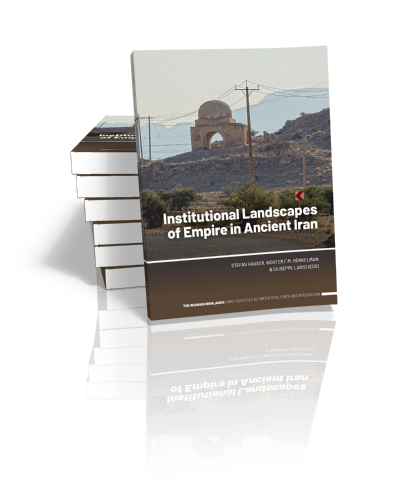
Institutional Landscapes of Empire in Ancient Iran
Edited by Stefan R. Hauser, Wouter F.M. Henkelman and Giuseppe Labisi | Forthcoming
Paperback ISBN: 9789464271744 | Hardback ISBN: 9789464271751 | Imprint: Sidestone Press Academics | Format: 210x280mm | ca. 320 pp. | The Iranian Highlands. Early Societies between Resilience and Integration 4 | Language: English | 28 illus. (bw) | 102 illus. (fc) | Keywords: archaeology; institution; Achaemenid Empire; Sasanian Empire; Ilkhanate; Iran; hydrological systems; infrastructure | download cover | DOI: 10.59641/z4c0w1x2y3 | CC-license: CC BY 4.0
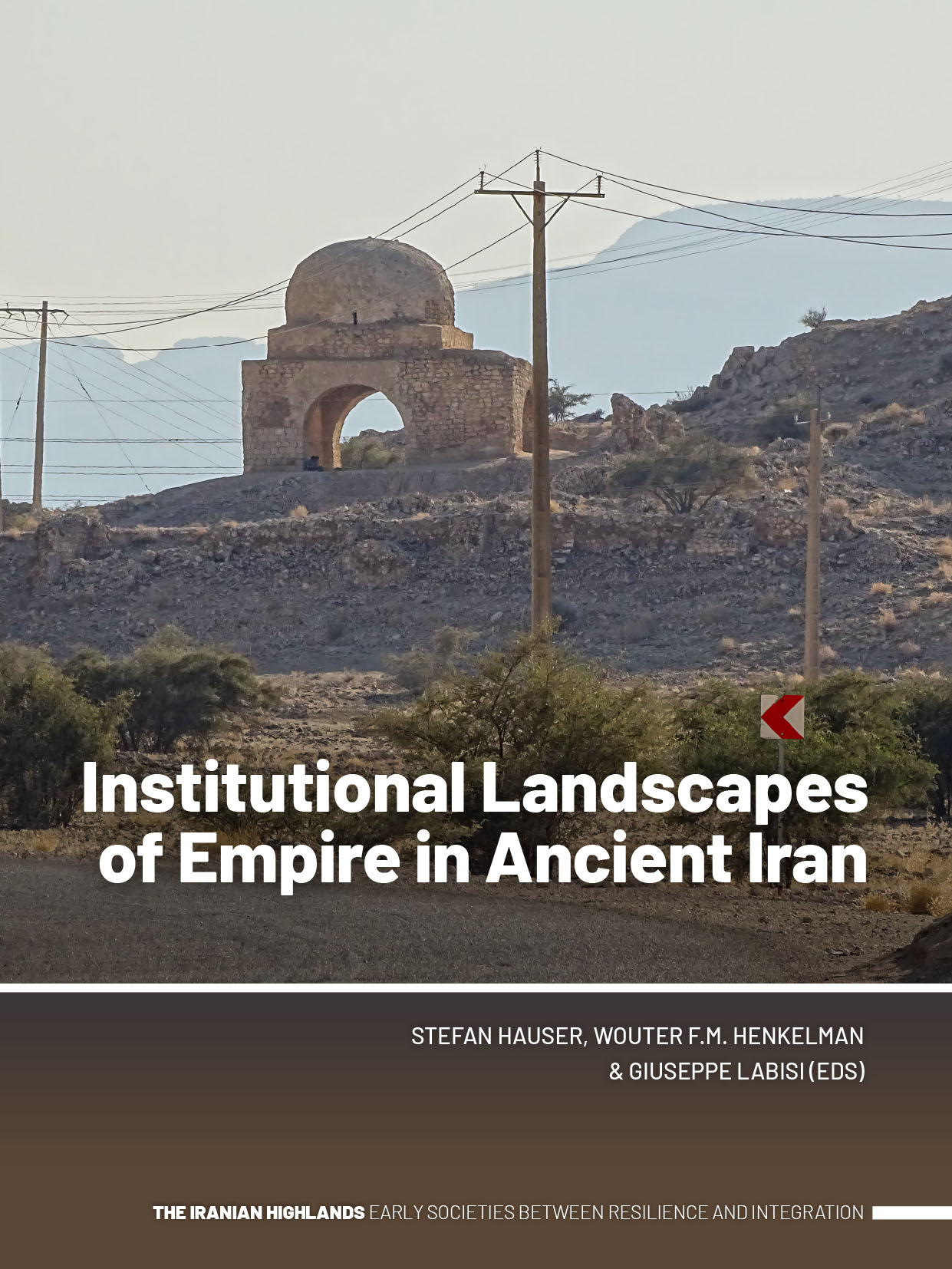
Publication date: 06-10-2026
-
Digital & Online access
Digital/Online version not (yet) available
-
Buy via Sidestone (EU & UK)
Get €5.00 discount on forthcoming books by using coupon code "PRE-ORDER" in your shopping cart!
-
Buy via our Distributors (WORLD)
For non-EU or UK destinations you can buy our books via our international distributors. Although prices may vary this will ensure speedy delivery and reduction in shipping costs or import tax. But you can also order with us directly via the module above.
For UK & other International destinations
For USA/Canada & other International destinations
-
Bookinfo
Paperback ISBN: 9789464271744 | Hardback ISBN: 9789464271751 | Imprint: Sidestone Press Academics | Format: 210x280mm | ca. 320 pp. | The Iranian Highlands. Early Societies between Resilience and Integration 4 | Language: English | 28 illus. (bw) | 102 illus. (fc) | Keywords: archaeology; institution; Achaemenid Empire; Sasanian Empire; Ilkhanate; Iran; hydrological systems; infrastructure | download cover | DOI: 10.59641/z4c0w1x2y3 | CC-license: CC BY 4.0
Publication date: 06-10-2026

We will plant a tree for each order containing a paperback or hardback book via OneTreePlanted.org.
This volume, containing the proceedings of a conference held in July 2022 in Istanbul, addresses and refines the concept of ‘institutional landscapes’ as they were created in Iran by the Achaemenid and Sassanian empires (with an excursus into the Ilkhanid period). It describes large-scale transformations of the physical landscape in terms of hydrological infrastructure, roads, large-scale plantations and settlement structures.
It addresses specific nodes in the administrative network and associated forms of control such as estates, fortresses and fire temples. It wides the scope of the concept of institutional landscapes to manifestations of authority in the form of monumental architecture but also in that of agents of the crown roaming the countryside. The conference and the present volume are the fruits of the DFG-funded Iranian Highlands program (SPP 2176); they bear witness to the enduring and productive cooperation between Iranian and non-Iranian scholars of ancient Iran.
This book is the fourth volume of a series published by the German-Iranian research cooperation “The Iranian Highlands: Resiliences and Integration in Premodern Societies”. The goal of the research project is to shine a new light on communities and societies that populated the Iranian highlands and their more or less successful strategies to cope with the many vagaries, the constant changes and risks of their natural and humanly shaped environments.
Introduction
Wouter F.M. Henkelman, Stefan R. Hauser & Giuseppe Labisi
I) Construing the Institutional Landscape
How archaeological landscape reflects institutional landscape: Pasargadae and its surrounding territory as case study
Sébastien Gondet & Kourosh Mohammadkhani
Institutional landscape in the Achaemenid Northeast
Wu Xin
The arrival of an empire: Features of a ruled landscape in North-Khorasan
Judith Thomalsky & Mohammad Javad Jafari
Transformation of settlement structures and irrigation systems in the eastern Achaemenid hinterlands: The case of the Murghab alluvial fan
Nazarij Buławka
The impact of the Sasanian irrigation system on the geographical divisions and institutional waterscape in Esfahān
Jaleh Kamalizad
The Sasanian institutional landscape in Borazjan as seen through water management
Zohreh Zehbari, Nasrollah Ebrahimi & Mehrdad Parsaei Borazjani
II) Nodes in the network
A) Estates and endowments
Dastgerd andar framud kardan: A diachronic study of dastgerd and related settlement models between the Sasanian and early Islamic periods
Giuseppe Labisi
Ilkhanid ways to appropriate, capitalise and develop the lands under their control: Approaches to government, land tenure and taxation
Birgitt Hoffmann
B) Religious institutions: fire temples
The manifold roles of Sasanian fire temples and mows within the institutional landscape of the Sasanian Empire
Negin Miri
Sasanian fire temples of Khorasan: Institutional infrastructure across a sacred landscape
Meysam Labbaf-Khaniki
Institutions, location, and architecture: Transformation of landscape and its meaning through the construction of chahartaq structures in ancient Iran
Sarvenaz Parsa
C) Military control and administration
Sasanian fortresses of Fars in context
Ahmad Ali Asadi & Giuseppe Labisi
Nodes in the imperial network: “Fortified places” in the Achaemenid institutional landscape
Rhyne King
III) The manifestation of authority
The inception of the institutional landscape of Persepolis
Pierfrancesco Callieri & Emad Matin
King’s land: The institutional landscape of Ardašīr-xwarrah and Bīšāpūr
Anahita Mittertrainer
The Immortal under the plane tree: The lance-bearers of Achaemenid Pārsa as agents of institutional continuity
Wouter F.M. Henkelman
Prof. Dr. Stefan R. Hauser
Stefan R. Hauser is professor of Mediterranean and Near Eastern Archaeology at the University of Konstanz. His publications cover the Neo-Assyrian to the Early Islamic period with a particular emphasis on the Arsacid Empire, and a strong interest in the history of research. He was PI of a project on resilience and transformation in the Bozpar Valley (SPP Iranian Highlands). He currently directs projects in Alexandria-on-theTigris/Charax Spasinou (Iraq) and on Sasanian manor houses and fire temples in Iran.

Dr. Wouter F.M. Henkelman
Trained as a classical philologist and ancient historian at the universities of Leiden and Utrecht, Wouter Henkelman graduated from the former in 2006 with a dissertation entitled The other gods who are, which explores cases of Elamite-Iranian acculturation. He is currently associate professor of Elamite and Achaemenid studies at the École Pratique des Hautes Études (4e section; since 2012); he is also director of the Sarikhani Centre for Elamite Studies at the same institution (since 2024).
Dr. Giuseppe Labisi
Born in Vittoria (Italy) in 1987, Giuseppe Labisi is an archaeologist who obtained his PhD in Islamic archaeology jointly at the Sapienza University of Rome and the Panthéon-Sorbonne University of Paris in 2017. He additionally obtained the professorship qualification in archaeology (in Italy) in 2023. Since 2020, he is postdoctoral researcher at the University of Konstanz (Germany) and since 2022 associate member of the Polen Research Centre (UR 4710), University of Orléans (France). His research focuses on the Sasanian-Islamic and Byzantine-Islamic transitions with an emphasis on architecture, although it also covers other topics such as landscape and ancient road systems, settlement dynamics and material culture.
Hauser, S. R., Henkelman, W. F. M., & Labisi, G. (Eds.). (in press). Institutional Landscapes of Empire in Ancient Iran. The Iranian Highlands. Early Societies between Resilience and Integration 4. Sidestone Press. https://doi.org/10.59641/z4c0w1x2y3
Abstract:
This volume, containing the proceedings of a conference held in July 2022 in Istanbul, addresses and refines the concept of ‘institutional landscapes’ as they were created in Iran by the Achaemenid and Sassanian empires (with an excursus into the Ilkhanid period). It describes large-scale transformations of the physical landscape in terms of hydrological infrastructure, roads, large-scale plantations and settlement structures.
It addresses specific nodes in the administrative network and associated forms of control such as estates, fortresses and fire temples. It wides the scope of the concept of institutional landscapes to manifestations of authority in the form of monumental architecture but also in that of agents of the crown roaming the countryside. The conference and the present volume are the fruits of the DFG-funded Iranian Highlands program (SPP 2176); they bear witness to the enduring and productive cooperation between Iranian and non-Iranian scholars of ancient Iran.
This book is the fourth volume of a series published by the German-Iranian research cooperation “The Iranian Highlands: Resiliences and Integration in Premodern Societies”. The goal of the research project is to shine a new light on communities and societies that populated the Iranian highlands and their more or less successful strategies to cope with the many vagaries, the constant changes and risks of their natural and humanly shaped environments.
Contents
Introduction
Wouter F.M. Henkelman, Stefan R. Hauser & Giuseppe Labisi
I) Construing the Institutional Landscape
How archaeological landscape reflects institutional landscape: Pasargadae and its surrounding territory as case study
Sébastien Gondet & Kourosh Mohammadkhani
Institutional landscape in the Achaemenid Northeast
Wu Xin
The arrival of an empire: Features of a ruled landscape in North-Khorasan
Judith Thomalsky & Mohammad Javad Jafari
Transformation of settlement structures and irrigation systems in the eastern Achaemenid hinterlands: The case of the Murghab alluvial fan
Nazarij Buławka
The impact of the Sasanian irrigation system on the geographical divisions and institutional waterscape in Esfahān
Jaleh Kamalizad
The Sasanian institutional landscape in Borazjan as seen through water management
Zohreh Zehbari, Nasrollah Ebrahimi & Mehrdad Parsaei Borazjani
II) Nodes in the network
A) Estates and endowments
Dastgerd andar framud kardan: A diachronic study of dastgerd and related settlement models between the Sasanian and early Islamic periods
Giuseppe Labisi
Ilkhanid ways to appropriate, capitalise and develop the lands under their control: Approaches to government, land tenure and taxation
Birgitt Hoffmann
B) Religious institutions: fire temples
The manifold roles of Sasanian fire temples and mows within the institutional landscape of the Sasanian Empire
Negin Miri
Sasanian fire temples of Khorasan: Institutional infrastructure across a sacred landscape
Meysam Labbaf-Khaniki
Institutions, location, and architecture: Transformation of landscape and its meaning through the construction of chahartaq structures in ancient Iran
Sarvenaz Parsa
C) Military control and administration
Sasanian fortresses of Fars in context
Ahmad Ali Asadi & Giuseppe Labisi
Nodes in the imperial network: “Fortified places” in the Achaemenid institutional landscape
Rhyne King
III) The manifestation of authority
The inception of the institutional landscape of Persepolis
Pierfrancesco Callieri & Emad Matin
King’s land: The institutional landscape of Ardašīr-xwarrah and Bīšāpūr
Anahita Mittertrainer
The Immortal under the plane tree: The lance-bearers of Achaemenid Pārsa as agents of institutional continuity
Wouter F.M. Henkelman
Prof. Dr. Stefan R. Hauser
Stefan R. Hauser is professor of Mediterranean and Near Eastern Archaeology at the University of Konstanz. His publications cover the Neo-Assyrian to the Early Islamic period with a particular emphasis on the Arsacid Empire, and a strong interest in the history of research. He was PI of a project on resilience and transformation in the Bozpar Valley (SPP Iranian Highlands). He currently directs projects in Alexandria-on-theTigris/Charax Spasinou (Iraq) and on Sasanian manor houses and fire temples in Iran.
Dr. Wouter F.M. Henkelman
Trained as a classical philologist and ancient historian at the universities of Leiden and Utrecht, Wouter Henkelman graduated from the former in 2006 with a dissertation entitled The other gods who are, which explores cases of Elamite-Iranian acculturation. He is currently associate professor of Elamite and Achaemenid studies at the École Pratique des Hautes Études (4e section; since 2012); he is also director of the Sarikhani Centre for Elamite Studies at the same institution (since 2024).
Dr. Giuseppe Labisi
Born in Vittoria (Italy) in 1987, Giuseppe Labisi is an archaeologist who obtained his PhD in Islamic archaeology jointly at the Sapienza University of Rome and the Panthéon-Sorbonne University of Paris in 2017. He additionally obtained the professorship qualification in archaeology (in Italy) in 2023. Since 2020, he is postdoctoral researcher at the University of Konstanz (Germany) and since 2022 associate member of the Polen Research Centre (UR 4710), University of Orléans (France). His research focuses on the Sasanian-Islamic and Byzantine-Islamic transitions with an emphasis on architecture, although it also covers other topics such as landscape and ancient road systems, settlement dynamics and material culture.
-
Digital & Online access
Digital/Online version not (yet) available
-
Buy via Sidestone (EU & UK)
Get €5.00 discount on forthcoming books by using coupon code "PRE-ORDER" in your shopping cart!
-
Buy via our Distributors (WORLD)
For non-EU or UK destinations you can buy our books via our international distributors. Although prices may vary this will ensure speedy delivery and reduction in shipping costs or import tax. But you can also order with us directly via the module above.
For UK & other International destinations
For USA/Canada & other International destinations
- Browse all books by subject
-
Search all books
We will plant a tree for each order containing a paperback or hardback book via OneTreePlanted.org.
You might also like:



© 2026 Sidestone Press KvK nr. 28114891 Privacy policy Sidestone Newsletter Terms and Conditions (Dutch)