


Victims of Violence from the early Roman fort Velsen 1 (Netherlands)
Scenarios for a cold case review
Edited by Mark Driessen and Carol van Driel-Murray | Forthcoming
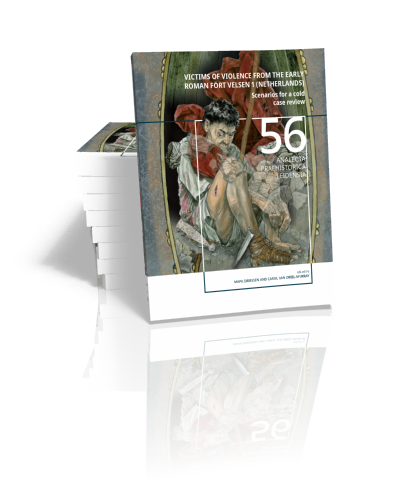
Victims of Violence from the early Roman fort Velsen 1 (Netherlands)
Scenarios for a cold case review
Edited by Mark Driessen and Carol van Driel-Murray | Forthcoming
Paperback ISBN: 9789464264609 | Hardback ISBN: 9789464264616 | Imprint: Sidestone Press | Format: 210x265mm | ca. 200 pp. | Analecta Praehistorica Leidensia 56 | Series: Analecta | Language: English | 48 illus. (bw) | 105 illus. (fc) | Keywords: Roman archaeology; fort Velsen (castellum Flevum); Frisian rebellion AD 28; forensic archaeology; isotope analysis; 3D skeletal reconstruction | download cover | DOI: 10.59641/j84776mv | CC-license: CC BY-NC-ND 4.0
Publication date: 24-10-2026
-
Digital & Online access
Digital/Online version not (yet) available
-
Buy via Sidestone (EU & UK)
Get €5.00 discount on forthcoming books by using coupon code "PRE-ORDER" in your shopping cart!
-
Buy via our Distributors (WORLD)
For non-EU or UK destinations you can buy our books via our international distributors. Although prices may vary this will ensure speedy delivery and reduction in shipping costs or import tax. But you can also order with us directly via the module above.
For UK & other International destinations
For USA/Canada & other International destinations
-
Bookinfo
Paperback ISBN: 9789464264609 | Hardback ISBN: 9789464264616 | Imprint: Sidestone Press | Format: 210x265mm | ca. 200 pp. | Analecta Praehistorica Leidensia 56 | Series: Analecta | Language: English | 48 illus. (bw) | 105 illus. (fc) | Keywords: Roman archaeology; fort Velsen (castellum Flevum); Frisian rebellion AD 28; forensic archaeology; isotope analysis; 3D skeletal reconstruction | download cover | DOI: 10.59641/j84776mv | CC-license: CC BY-NC-ND 4.0
Publication date: 24-10-2026

We will plant a tree for each order containing a paperback or hardback book via OneTreePlanted.org.
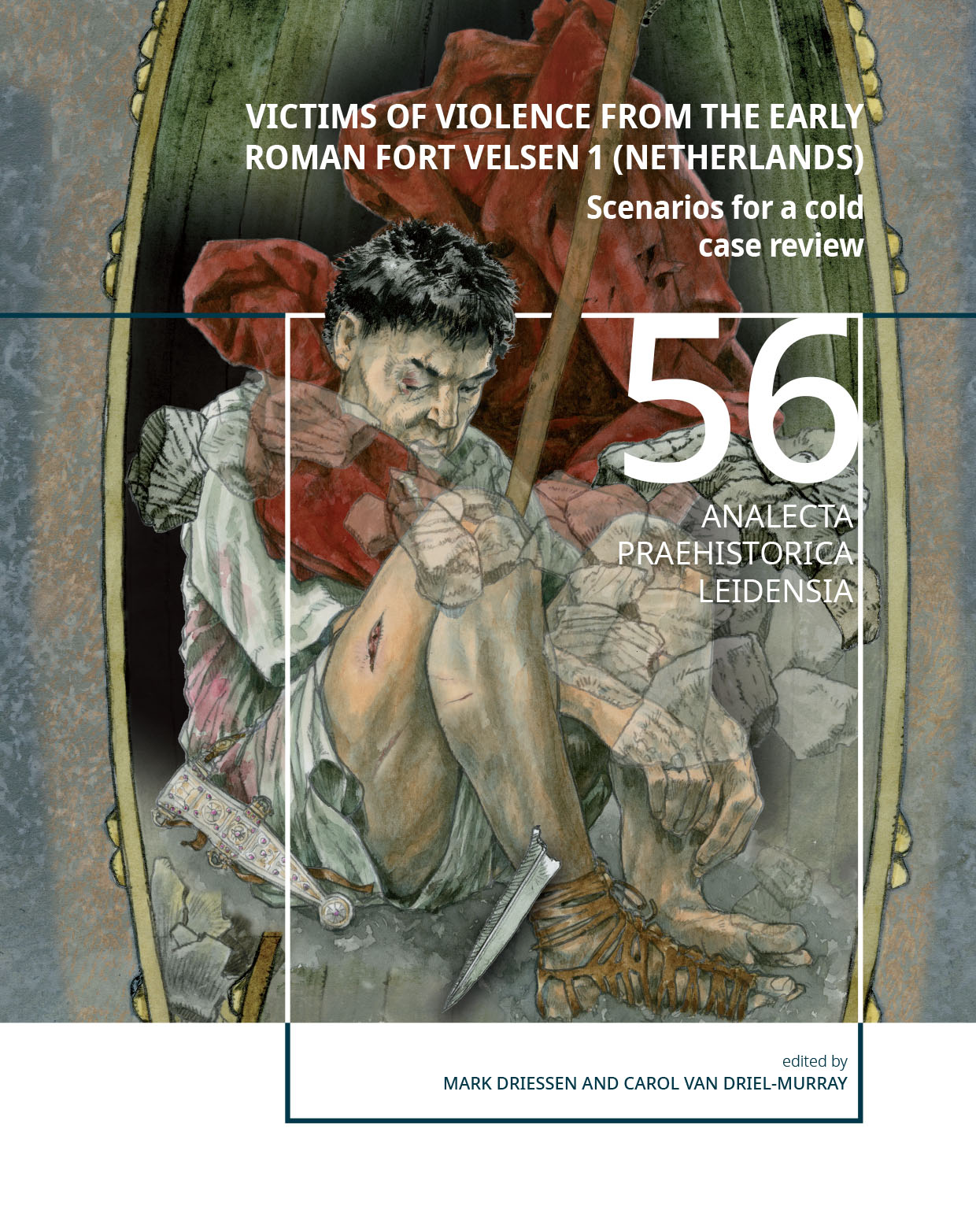
In 1977, a remarkable discovery was made at the early Roman fort of Velsen (Netherlands): on the bottom of a well lay the skeleton of a man with traumatic injuries. Who was he, how did he die, and what circumstances led to his deposition? This book revisits this 2,000-year-old ‘cold case’, combining archaeological, historical, and scientific evidence to reconstruct the final moments of the victim and the events surrounding his death.
Renewed research, prompted by preparations for a museum exhibition, brought together a wide range of analytical approaches. Isotope analysis revealed that the man, as well as two others found in a nearby well, were not local to the region. Detailed study of skeletal trauma, supported by 3D imaging and experimental reconstructions, sheds new light on the nature of the injuries and the weapon used, fundamentally altering earlier interpretations. Additional finds from the well, including a military dagger, belt, and decorated sheath, provide further clues to the man’s identity and status.
Set against the historical backdrop of the Frisian rebellion of AD 28, as described by Tacitus, this multi-authored volume presents the results of interdisciplinary research, including pathology, environmental analysis, and site interpretation. Rather than offering a single definitive answer, the book invites readers to evaluate six plausible scenarios, highlighting the tensions between historical sources and archaeological evidence in reconstructing past violence.
Chapter 1. The Man in the Well of Velsen revisited : introduction
Mark Driessen and Carol van Driel-Murray
Chapter 2. Well 2: structure, contents and human remains
Mark Driessen and Carol van Driel-Murray with contributions by Frans Diederik, Johannes Huijbregts, Michael H. Field and Bert Verleijsdonk, Maarten Sepers and Hayley Mickleburg
Box 1. The excavation
Frans Diederik
Box 2. The botanical remains
Michael H. Field and Bert Verleijsdonk
Box 3. The insect remains
Johannes Huijbregts
Box 4. Burnt Daub
Mark Driessen and Maarten Sepers
Box 5. Decomposition and bone movement in a seated burial
Hayley Mickleburgh
Chapter 3. Artefacts associated with the corpse
Carol van Driel-Murray
Chapter 4. The decorated dagger sheath: a question of dating
Michael Johannes Klein
Chapter 5. The analysis of the man in the well at Velsen
Sarah Inskip
Chapter 6. Joined in Death. The two males from Well S190 in Velsen I
Rachel Schats
Chapter 7. Stranger in a Strange Land? Isotopic Determination of the Birthplace of a Renowned Roman Soldier from Velsen, The Netherlands
Andrea L. Waters-Rist and Jessica L.A. Palmer, with a contribution by Lisette Kootker
Chapter 8. 3D analysis of the pathological punctures of the man in well 2
Maarten Sepers and Mark Driessen
Chapter 9. A Soldier’s Face
Maja d’Hollosy
Chapter 10. Exhibiting the soldier from Velsen in the National Museum of Antiquities, Leiden
Jasper de Bruin
Chapter 11. An ancient cold case in six scenarios
Mark Driessen and Carol van Driel-Murray
Dr. Mark Driessen
Mark Driessen graduated at Wageningen University (tropical forestry and agriculture) and worked for many years in Africa and South America. After returning to The Netherlands he started working as a field archaeologist and studied Provincial Roman Archaeology at the University of Amsterdam and obtained his PhD on the topography, settlement continuity and monumentality of Roman Nijmegen at the same university. He excavated and worked on the Roman harbour of Voorburg-Arentsburg (Forum Hadriani). Since 2011 he is Assistant Professor in Provincial Roman Archaeology at Leiden University. In a joint venture operation with the al-Hussein bin Talal University (Petra-Jordan) Mark Driessen and Fawzi Abudanah are the directors of the Udhruh Archaeological Project, and together with David Breeze of the Qasr Bshir Conservation Project (both in Jordan).

Dr. Carol van Driel-Murray
Carol van Driel-Murray (1950) obtained her PhD in 1987 at the University of Amsterdam on the subject of Roman Leatherwork. She taught the Archaeology of the Roman Provinces at University of Amsterdam till 2012, and at the Faculty of Archaeology at Leiden University till her retirement in 2015. She has published extensively on Roman military leatherwork, Roman and medieval footwear. Her research interests include gender in material culture, military communities and military equipment. She participated in various excavations in Syria, and has been involved with the Jebel Aruda campaigns and publication from its inception.
Driessen, M., & Van Driel-Murray, C. (Eds.). (in press). Victims of Violence from the early Roman fort Velsen 1 (Netherlands). Scenarios for a cold case review. Analecta Praehistorica Leidensia 56. Sidestone Press. https://doi.org/10.59641/j84776mv
Abstract:
In 1977, a remarkable discovery was made at the early Roman fort of Velsen (Netherlands): on the bottom of a well lay the skeleton of a man with traumatic injuries. Who was he, how did he die, and what circumstances led to his deposition? This book revisits this 2,000-year-old ‘cold case’, combining archaeological, historical, and scientific evidence to reconstruct the final moments of the victim and the events surrounding his death.
Renewed research, prompted by preparations for a museum exhibition, brought together a wide range of analytical approaches. Isotope analysis revealed that the man, as well as two others found in a nearby well, were not local to the region. Detailed study of skeletal trauma, supported by 3D imaging and experimental reconstructions, sheds new light on the nature of the injuries and the weapon used, fundamentally altering earlier interpretations. Additional finds from the well, including a military dagger, belt, and decorated sheath, provide further clues to the man’s identity and status.
Set against the historical backdrop of the Frisian rebellion of AD 28, as described by Tacitus, this multi-authored volume presents the results of interdisciplinary research, including pathology, environmental analysis, and site interpretation. Rather than offering a single definitive answer, the book invites readers to evaluate six plausible scenarios, highlighting the tensions between historical sources and archaeological evidence in reconstructing past violence.
Contents
Chapter 1. The Man in the Well of Velsen revisited : introduction
Mark Driessen and Carol van Driel-Murray
Chapter 2. Well 2: structure, contents and human remains
Mark Driessen and Carol van Driel-Murray with contributions by Frans Diederik, Johannes Huijbregts, Michael H. Field and Bert Verleijsdonk, Maarten Sepers and Hayley Mickleburg
Box 1. The excavation
Frans Diederik
Box 2. The botanical remains
Michael H. Field and Bert Verleijsdonk
Box 3. The insect remains
Johannes Huijbregts
Box 4. Burnt Daub
Mark Driessen and Maarten Sepers
Box 5. Decomposition and bone movement in a seated burial
Hayley Mickleburgh
Chapter 3. Artefacts associated with the corpse
Carol van Driel-Murray
Chapter 4. The decorated dagger sheath: a question of dating
Michael Johannes Klein
Chapter 5. The analysis of the man in the well at Velsen
Sarah Inskip
Chapter 6. Joined in Death. The two males from Well S190 in Velsen I
Rachel Schats
Chapter 7. Stranger in a Strange Land? Isotopic Determination of the Birthplace of a Renowned Roman Soldier from Velsen, The Netherlands
Andrea L. Waters-Rist and Jessica L.A. Palmer, with a contribution by Lisette Kootker
Chapter 8. 3D analysis of the pathological punctures of the man in well 2
Maarten Sepers and Mark Driessen
Chapter 9. A Soldier’s Face
Maja d’Hollosy
Chapter 10. Exhibiting the soldier from Velsen in the National Museum of Antiquities, Leiden
Jasper de Bruin
Chapter 11. An ancient cold case in six scenarios
Mark Driessen and Carol van Driel-Murray
Dr. Mark Driessen
Mark Driessen graduated at Wageningen University (tropical forestry and agriculture) and worked for many years in Africa and South America. After returning to The Netherlands he started working as a field archaeologist and studied Provincial Roman Archaeology at the University of Amsterdam and obtained his PhD on the topography, settlement continuity and monumentality of Roman Nijmegen at the same university. He excavated and worked on the Roman harbour of Voorburg-Arentsburg (Forum Hadriani). Since 2011 he is Assistant Professor in Provincial Roman Archaeology at Leiden University. In a joint venture operation with the al-Hussein bin Talal University (Petra-Jordan) Mark Driessen and Fawzi Abudanah are the directors of the Udhruh Archaeological Project, and together with David Breeze of the Qasr Bshir Conservation Project (both in Jordan).
Dr. Carol van Driel-Murray
Carol van Driel-Murray (1950) obtained her PhD in 1987 at the University of Amsterdam on the subject of Roman Leatherwork. She taught the Archaeology of the Roman Provinces at University of Amsterdam till 2012, and at the Faculty of Archaeology at Leiden University till her retirement in 2015. She has published extensively on Roman military leatherwork, Roman and medieval footwear. Her research interests include gender in material culture, military communities and military equipment. She participated in various excavations in Syria, and has been involved with the Jebel Aruda campaigns and publication from its inception.
-
Digital & Online access
Digital/Online version not (yet) available
-
Buy via Sidestone (EU & UK)
Get €5.00 discount on forthcoming books by using coupon code "PRE-ORDER" in your shopping cart!
-
Buy via our Distributors (WORLD)
For non-EU or UK destinations you can buy our books via our international distributors. Although prices may vary this will ensure speedy delivery and reduction in shipping costs or import tax. But you can also order with us directly via the module above.
For UK & other International destinations
For USA/Canada & other International destinations
- Browse all books by subject
-
Search all books
We will plant a tree for each order containing a paperback or hardback book via OneTreePlanted.org.
You might also like:



© 2026 Sidestone Press KvK nr. 28114891 Privacy policy Sidestone Newsletter Terms and Conditions (Dutch)