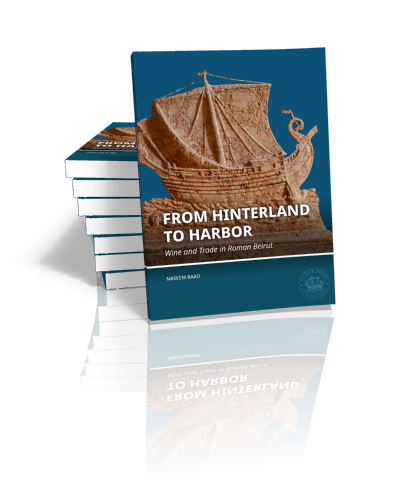
From Hinterland to Harbour

Wine and Trade in Roman Beirut

Naseem Raad | Forthcoming

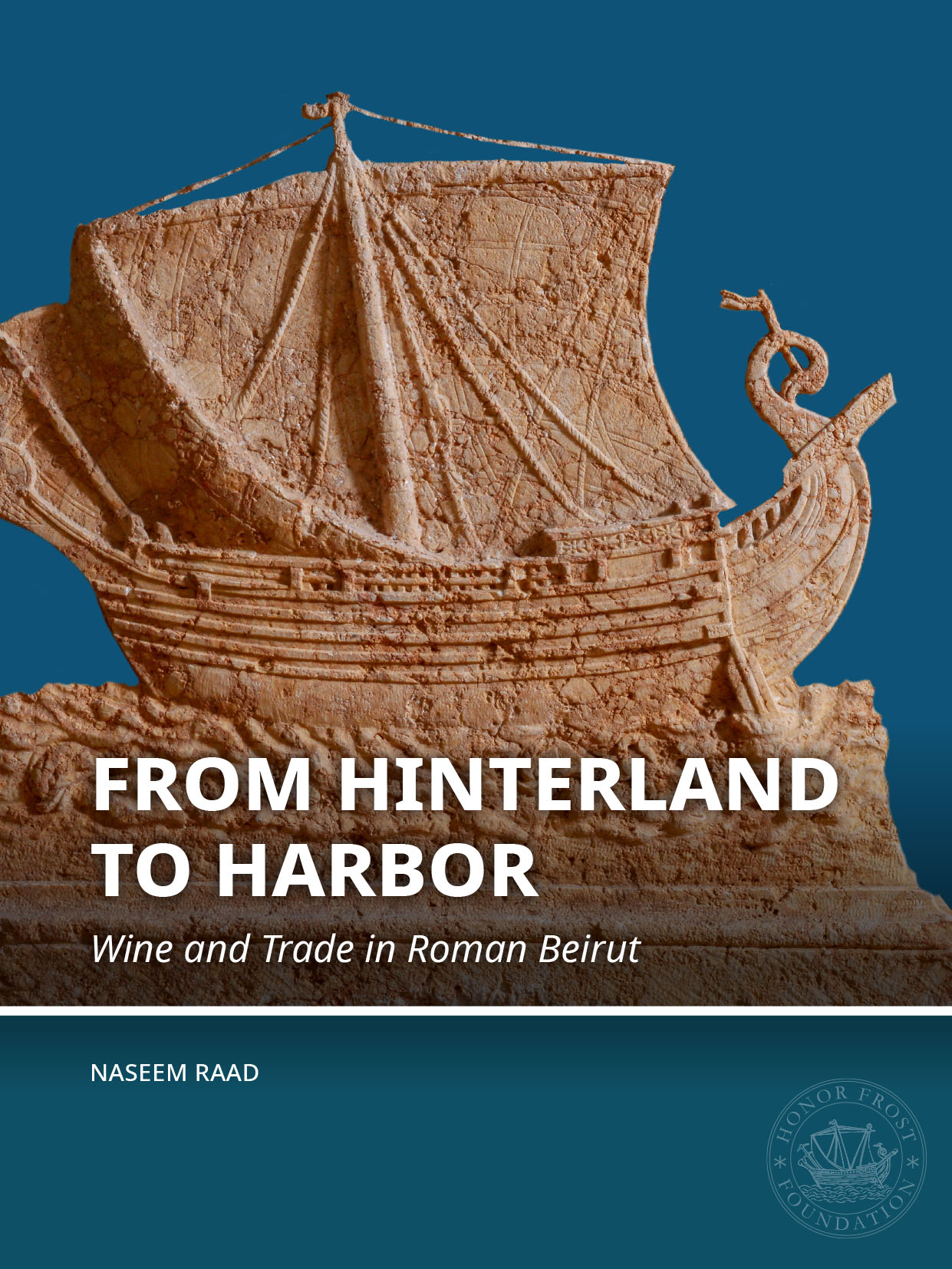
From Hinterland to Harbour

Wine and Trade in Roman Beirut

Naseem Raad | Forthcoming


Paperback ISBN: 9789464281354 | Hardback ISBN: 9789464281361 | Imprint: Sidestone Press Dissertations | Format: 210x280mm | ca. 170 pp. | Honor Frost Foundation Research Publication 4 | Series: Honor Frost Foundation Research Publication | Language: English | 4 illus. (bw) | 52 illus. (fc) | Keywords: amphorae; Berytus; East Mediterranean; geocomputation; maritime archaeology; ancient trade; viticulture | download cover | DOI: 10.59641/u5x1r2s3t4

Publication date: 15-10-2026

We will plant a tree for each order containing a paperback or hardback book via OneTreePlanted.org.

Ancient Berytus, located in modern-day Beirut, was an influential Roman port city in the eastern Mediterranean. Although relatively understudied to date, the city’s place in the Roman economy is explored here through the novel integration of archaeological, historical, and geocomputational approaches. In so doing, the physical layout and operational capacity of the city’s harbour is situated within the wider Levantine maritime landscape. Expanding into the surrounding hinterland, the region’s agricultural potential is evaluated, with particular attention to the organization and scale of wine and olive oil production at rural sites. These agricultural systems are considered within their environmental contexts to understand the dynamics between production and export.

Following Beirut amphorae across the Mediterranean, the analysis traces the patterns of export and distribution by drawing on ceramic datasets from extra-regional port sites. The study reconstructs the spatial and chronological reach of Berytus’ commercial networks and evaluates the extent to which its wine industry was embedded within broader trading circuits. These empirical patterns are compared against geocomputational models that calculate likely maritime routes based on reconstructed wind regimes.

Taken together, these lines of evidence demonstrate how a micro-economic, site-specific approach can illuminate the mechanisms underlying Roman maritime commerce. By combining amphora studies, hinterland analysis, and geocomputational modelling, this book offers a grounded understanding of how agricultural production, port logistics, and trader behaviour intersected to shape the economic role of the city. It also allows for a diachronic consideration of how these patterns shifted throughout sociocultural and geopolitical change on the local and extra-regional scales.

List of Figures
List of Tables

Introduction
Berytus: A Roman Port
The Hinterland of Berytus
Packaging
The Distribution of the Beirut Amphora
The Maritime Networks of Berytus
A Holistic View of Viticulture in Berytus
Conclusion

Appendix A: Shipwrecks in the Mediterranean
Appendix B: Tables and Statistics of the Hinterland of Berytus
Appendix C: Amphora Distribution Tables and Statistics
Appendix D: Methodology for the Geocomputational Approach for Sailing Cost Rasters
Bibliography
Index


Dr. Naseem Raad

Naseem Raad is a maritime archaeologist currently serving as the Program Director for the Marine Sciences and Culture Minor at the American University of Beirut. His research centers around historical economics and maritime trade routes in the eastern Mediterranean, with a particular focus on the olive oil and wine industries in the Classical Period.

read more

Raad, N. (in press). From Hinterland to Harbour. Wine and Trade in Roman Beirut. Honor Frost Foundation Research Publication 4. Sidestone Press. https://doi.org/10.59641/u5x1r2s3t4

Abstract:

Ancient Berytus, located in modern-day Beirut, was an influential Roman port city in the eastern Mediterranean. Although relatively understudied to date, the city’s place in the Roman economy is explored here through the novel integration of archaeological, historical, and geocomputational approaches. In so doing, the physical layout and operational capacity of the city’s harbour is situated within the wider Levantine maritime landscape. Expanding into the surrounding hinterland, the region’s agricultural potential is evaluated, with particular attention to the organization and scale of wine and olive oil production at rural sites. These agricultural systems are considered within their environmental contexts to understand the dynamics between production and export.

Following Beirut amphorae across the Mediterranean, the analysis traces the patterns of export and distribution by drawing on ceramic datasets from extra-regional port sites. The study reconstructs the spatial and chronological reach of Berytus’ commercial networks and evaluates the extent to which its wine industry was embedded within broader trading circuits. These empirical patterns are compared against geocomputational models that calculate likely maritime routes based on reconstructed wind regimes.

Taken together, these lines of evidence demonstrate how a micro-economic, site-specific approach can illuminate the mechanisms underlying Roman maritime commerce. By combining amphora studies, hinterland analysis, and geocomputational modelling, this book offers a grounded understanding of how agricultural production, port logistics, and trader behaviour intersected to shape the economic role of the city. It also allows for a diachronic consideration of how these patterns shifted throughout sociocultural and geopolitical change on the local and extra-regional scales.

Contents

List of Figures
List of Tables

Introduction
Berytus: A Roman Port
The Hinterland of Berytus
Packaging
The Distribution of the Beirut Amphora
The Maritime Networks of Berytus
A Holistic View of Viticulture in Berytus
Conclusion

Appendix A: Shipwrecks in the Mediterranean
Appendix B: Tables and Statistics of the Hinterland of Berytus
Appendix C: Amphora Distribution Tables and Statistics
Appendix D: Methodology for the Geocomputational Approach for Sailing Cost Rasters
Bibliography
Index

Dr. Naseem Raad

Naseem Raad is a maritime archaeologist currently serving as the Program Director for the Marine Sciences and Culture Minor at the American University of Beirut. His research centers around historical economics and maritime trade routes in the eastern Mediterranean, with a particular focus on the olive oil and wine industries in the Classical Period.

read more



We will plant a tree for each order containing a paperback or hardback book via OneTreePlanted.org.

You might also like:


© 2026 Sidestone Press      KvK nr. 28114891           Privacy policy     Sidestone Newsletter     Terms and Conditions (Dutch)