Abstract:
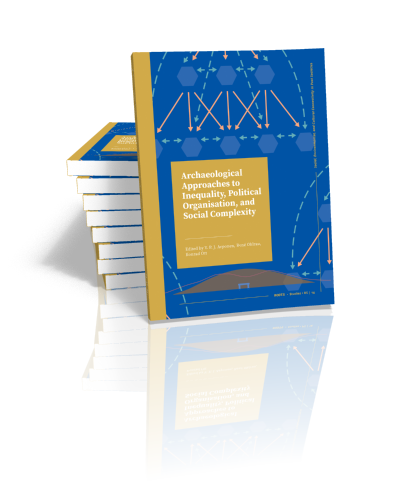
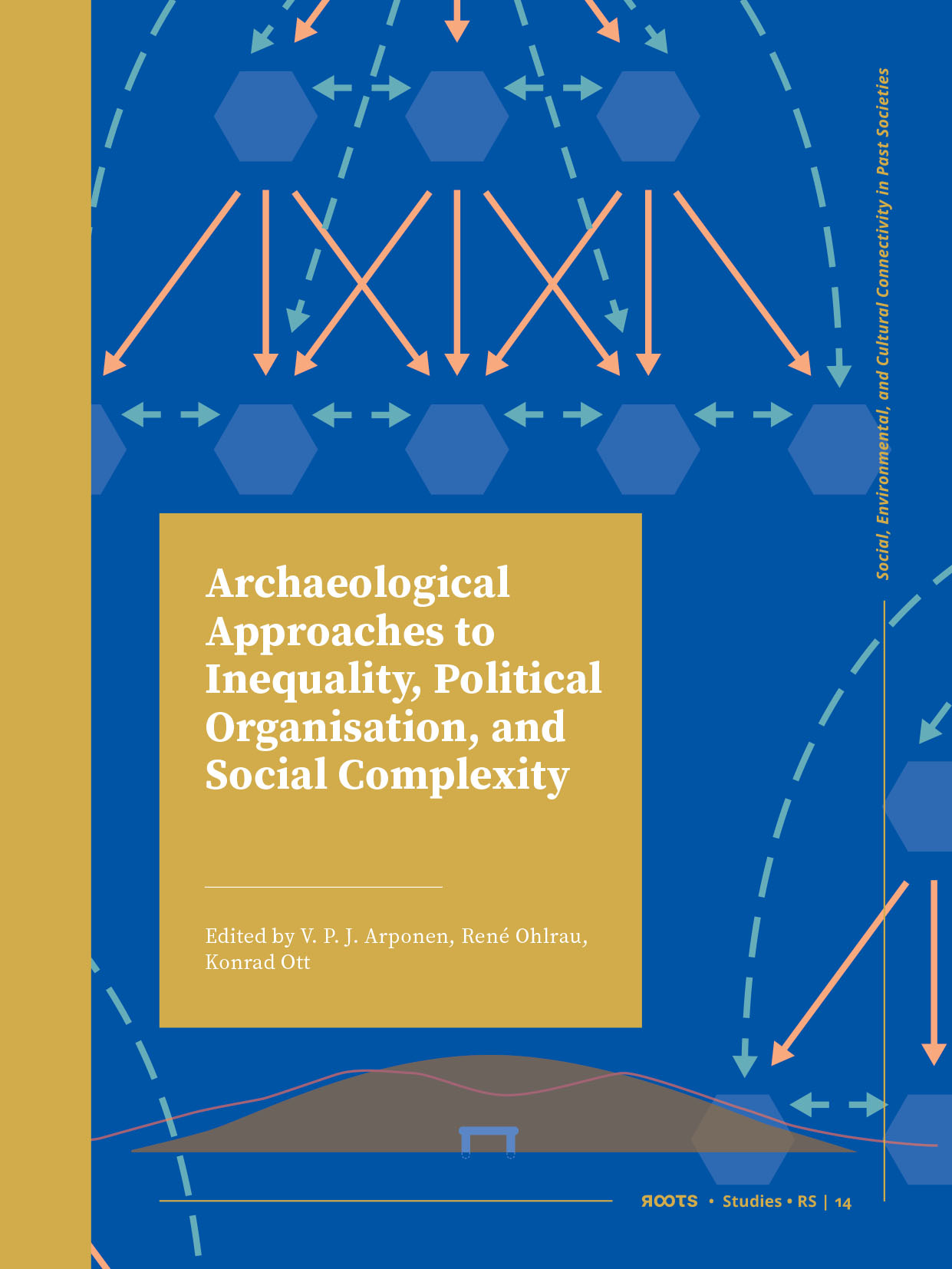
Featuring internationally leading contributions on archaeological theories of inequality, political organisation, and social complexity, this concise collection explores alternative and complementary perspectives to dominant approaches to inequality. The book illustrates the breadth and depth of archaeological theory in this arena, discusses ways of operationalising theory in archaeology, and suggests connections to present day debates and approaches.
Drawing on recent advances in archaeological theory, the volume critically discusses conventional narratives that treat hierarchy and centralised authority as inevitable outcomes of the emergence of social complexity in human history. A remarkable diversity of organisational forms is evident in the archaeological record, demonstrating that collective action and consensual power have been features of human social life across time and space as pervasive as hierarchy and domination-based power. Chapters interrogate how communities of varying sizes and characteristics have navigated the tension between egalitarian practices and hierarchical pressures.
The collection further argues that multi-dimensional accounts of capital and power are both possible and necessary for understanding the past and indeed present nature of inequality. The volume discusses how symbolic, social, and material forms of capital generate, distribute – and indeed maldistribute – types of wealth beyond material welfare, each relevant for an understanding of societal dynamics in the distant past as in the present. Alongside different forms of power and wealth, the collection also explores what the archaeological record can reveal about the perspectives and opportunities available to past peoples and the structural conditions that expanded or constrained their well-being.
Contents
Foreword of the series editors
Preface of the book editors
Introduction
V. P. J. Arponen, René Ohlrau, Konrad Ott
Questioning the capitalist lens: Anarchism as a critical theory for assessing sociopolitical dynamics and inequality in the past
Bill Angelbeck
Exclusionary-corporate dimension of governance
Gary M. Feinman
A bottom-up perspective on wealth and power in the archaeological discourse on inequality
Martin Furholt
Material correlates of inequality: A case study from the Viking Age
Orri Vésteinsson
A conceptual foundation and operationalisation of the capability approach for archaeology: A case study from the Cucuteni-Trypillia societies
René Ohlrau, V. P. J. Arponen, Tim Kerig

Dr.
V. P. J. Arponen
V. P. J. Arponen PhD is a Junior Research Group Leader in the Reflective Turn Forum of the ROOTS Cluster of Excellence at Kiel University, Germany (EXC 2150 ROOTS – 390870439). His academic research focuses on various topics in the philosophy of archaeology and anthropology.
read more
Prof. Dr.
Konrad Ott
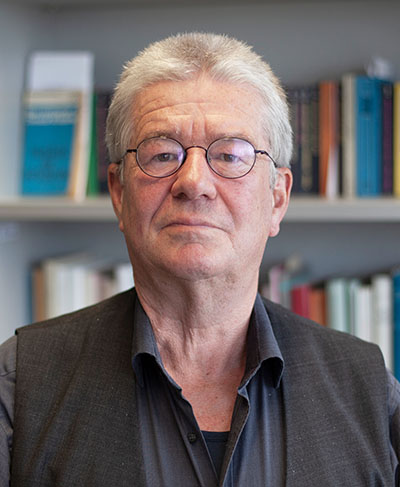
Konrad Ott is a full professor for environmental philosophy and ethics at Kiel University. He wrote a PhD thesis on the origins and the discursive logic of scientific history. His current fields of research are environmental ethics, climate ethics, sustainability, nature conservation, discourse theory, and philosophy of history. Konrad Ott is a PI of the Reflective Turn Forum of the ROOTS Cluster of Excellence.
read more
Dr.
René Ohlrau
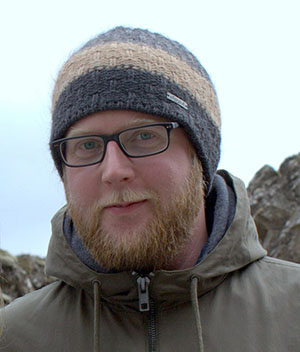
René Ohlrau is currently a Postdoctoral Fellow of the Excellence Cluster ROOTS at Kiel University. He obtained his Master of Arts in 2014 at Kiel University for analysing the renewed geomagnetic survey of Trypillia ‘mega-sites’. During his PhD-studies between 2014 and 2018 at the Graduate School ‘Human development in landscapes’, he was involved in the excavations at the ‘mega-site’ near Maidanets’ke conducted by the CRC1266 ‘Scales of Transformation’.
read more