


Tall Dāmiya (volume I)
Archaeological research in the Central Jordan Valley between 2004 and 2019
Edited by Lucas P. Petit and Zeidan A. Kafafi | 2026
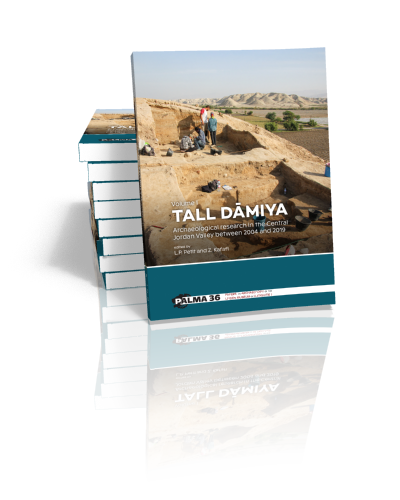
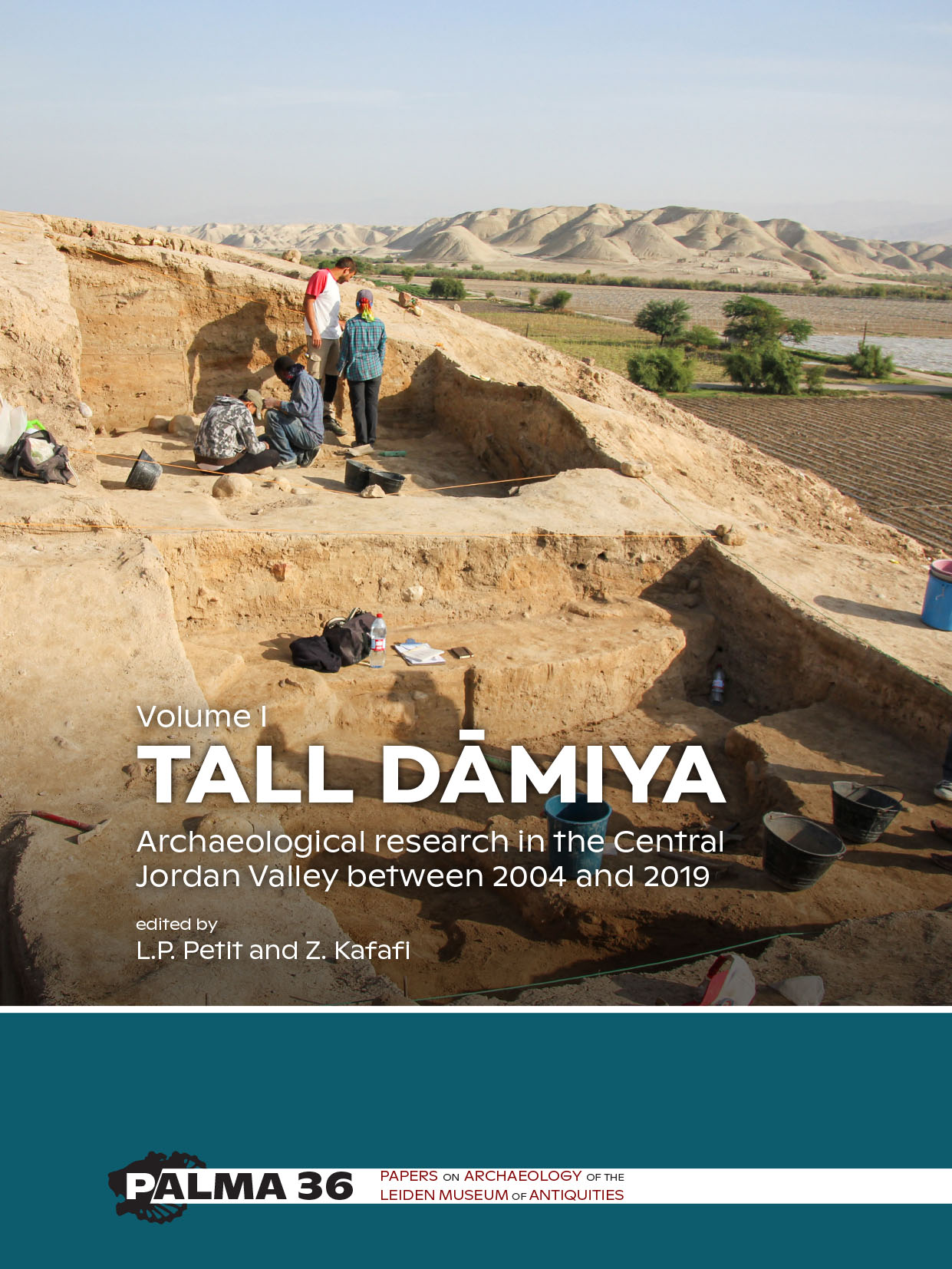
Tall Dāmiya (volume I)
Archaeological research in the Central Jordan Valley between 2004 and 2019
Edited by Lucas P. Petit and Zeidan A. Kafafi | 2026
Paperback ISBN: 9789464264661 | Hardback ISBN: 9789464264678 | Imprint: Sidestone Press | Format: 210x280mm | 252 pp. | Papers on Archaeology of the Leiden Museum of Antiquities 36 | Series: PALMA | Language: English | 350 illus. (bw) | 263 illus. (fc) | Keywords: settlement archaeology; Jordan; Iron Age; cult; Jordan Valley; ancient West Asia; ancient Near East | download cover | DOI: 10.59641/o7r3l4m5n6 | CC-license: CC BY-NC-ND 4.0
Read online 68 times
- Digital & Online access
-
Buy via Sidestone (EU & UK)
-
Buy via our Distributors (WORLD)
For non-EU or UK destinations you can buy our books via our international distributors. Although prices may vary this will ensure speedy delivery and reduction in shipping costs or import tax. But you can also order with us directly via the module above.
UK international distributor
USA international distributor
-
Bookinfo
Paperback ISBN: 9789464264661 | Hardback ISBN: 9789464264678 | Imprint: Sidestone Press | Format: 210x280mm | 252 pp. | Papers on Archaeology of the Leiden Museum of Antiquities 36 | Series: PALMA | Language: English | 350 illus. (bw) | 263 illus. (fc) | Keywords: settlement archaeology; Jordan; Iron Age; cult; Jordan Valley; ancient West Asia; ancient Near East | download cover | DOI: 10.59641/o7r3l4m5n6 | CC-license: CC BY-NC-ND 4.0
Read online 68 times

We will plant a tree for each order containing a paperback or hardback book via OneTreePlanted.org.
This monograph presents the results of nine seasons of archaeological excavations (2004–2019) at Tall Dāmiya, a key site in the Central Jordan Valley. Situated just south of the confluence of the Az-Zarqa and Jordan rivers, near one of the region’s few natural river fords, the settlement mound has long served a vital crossroads of cultures.
Founded in the Late Bronze Age, Tall Dāmiya developed into a prominent cultic centre in the Iron Age. In the second half of the first millennium BCE, it was repurposed as a storage site for mobile pastoralists, later serving as a graveyard in the Byzantine and Ottoman periods – before becoming a battleground in the twentieth century.
Presented in three volumes, this joint Jordanian–Dutch project explores how people lived in and moved through the arid Jordan Valley over time, offering a comprehensive reconstruction of Tall Dāmiya’s settlement history and shedding new light on its long and varied afterlives.
This is Part 1 of a 3 part volume:
Contents Volume I:
Preface
PART I – INTRODUCTION
1. Introduction
Lucas P. Petit and Zeidan Kafafi
2. Jordanian-Dutch cooperation in the Central Jordan Valley
Zeidan Kafafi
3. Early records and history of study
Zeidan Kafafi and Lucas P. Petit
4. Modern habitation history of Tall Dāmiya
Zeidan Kafafi
PART II – REGIONAL STUDIES
5. Archaeological surface survey around Tall Dāmiya
Eva Kaptijn
6. The historiography of the Dāmiya bridges
Lucas P. Petit
PART III – THE UPPER MOUND: STRATIGRAPHY AND ARCHITECTURE
7. Iron Age occupation – Strata XVIII-IV
Lucas P. Petit and Zeidan Kafafi
8. Persian and Hellenistic remains – Stratum III
Lucas P. Petit and Zeidan Kafafi
9. The burials – Strata II-I
Jeroen Rensen
10. Contemporary occupation remains – Stratum 0
Lucas P. Petit
PART IV – THE LOWER MOUND: STRATIGRAPHY AND ARCHITECTURE
11. Area B
Lucas P. Petit and Zeidan Kafafi, with contribution by Jeroen Rensen
Contents Volume II:
PART V – FINDS AND SPECIALISED STUDIES
12. Pottery
12a. Pottery repertoire and statistics
Lucas P. Petit and Zeidan Kafafi
12b. Pottery catalogue
Lucas P. Petit and Zeidan Kafafi
13. Finds catalogue
Lucas P. Petit and Zeidan Kafafi
14. Seals, scarabs, and scaraboids
Alexander Ahrens
15. Figurines and anthropomorphic statues
Zeidan Kafafi and Lucas P. Petit
16. The inscriptions
Omar al-Ghul
17. Textile production
Jeanette Boertien
18. Archaeobotanical remains
18a. Archaeobotanical remains from the excavation seasons 2012, 2013, and 2014
Yotti Van Deun
18b. Archaeobotanical investigation of two storage rooms in Stratum VII
Bert Verleijsdonk, with a contribution by Corrie Bakels
18c. The botanical content of three Persian-Hellenistic pits
Corrie Bakels
19. Archaeozoological remains
19a. Faunal remains
Maaike Groot, Anna Hofmann, and Jana Eger
19b. Analyses and identification of serpent bones
Lucas P. Petit
20. Compositional analysis of soil, ceramics, and small finds at Tall Dāmiya using non-destructive X-ray fluorescence spectroscopy
Dennis Braekmans
Contents Volume III:
PART VI – THEORETICAL CONSIDERATIONS, DISCUSSIONS, AND CONCLUSIONS
21. Worshippers, travellers, and trade: the Tall Dāmiya ‘sanctuary’ in its context
Diederik J.H. Halbertsma
22. A holistic view of cultic practices at Tall Dāmiya and a potential dual sanctuary
Michel de Vreeze
23. Conclusions
Lucas P. Petit and Zeidan Kafafi
References
Appendix A – Index of field loci
Appendix B – Index of bucket numbers
Appendix C – Profile drawings
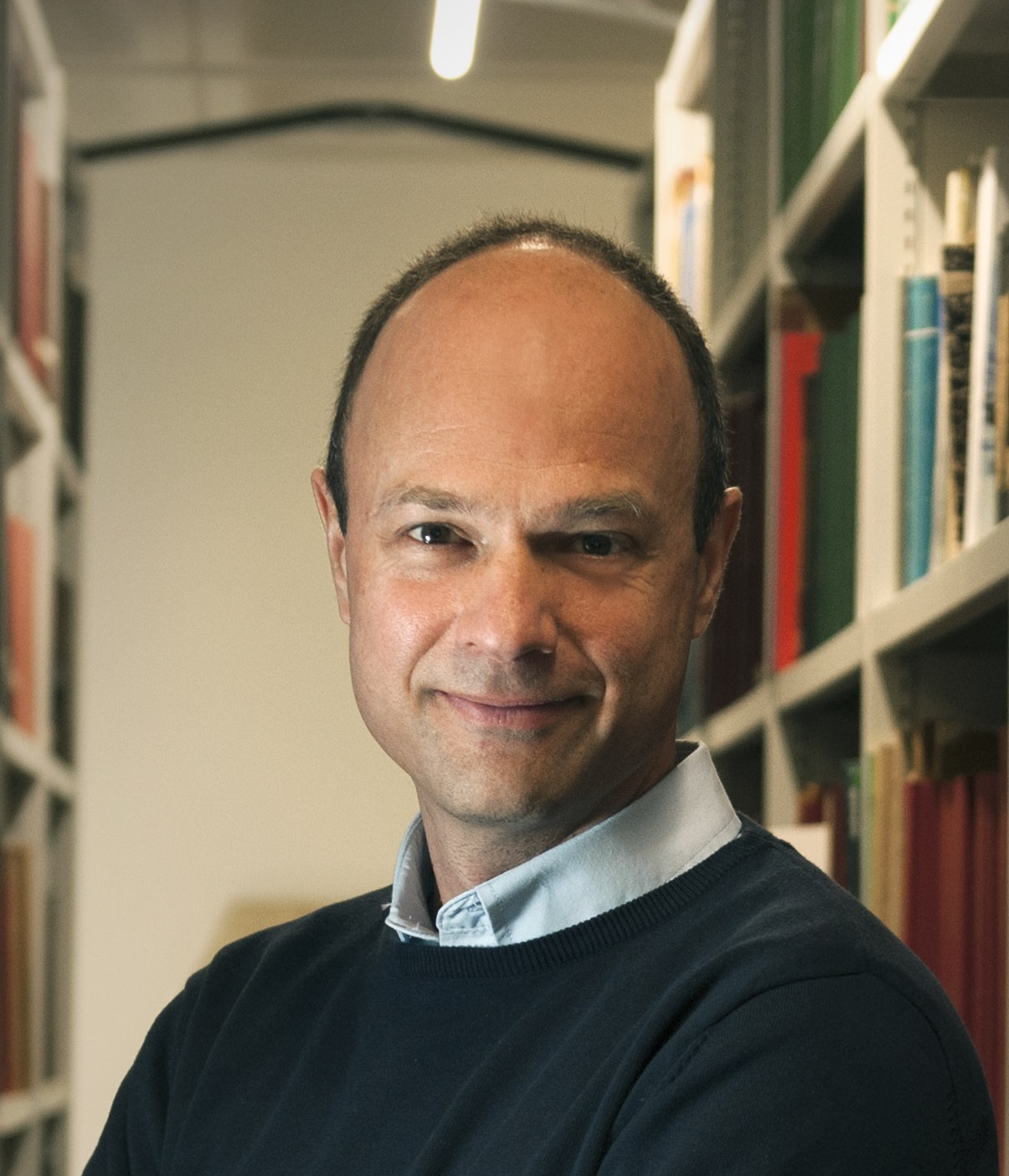
Dr. Lucas P. Petit
Lucas Petit is head of collections and research of the Dutch National Museum of Antiquities. He has held positions at the Johann Wolfgang Goethe-Universität Frankfurt am Main and at Leiden University. In the last decades he has been involved in various archaeological fieldwork projects in Europe, Africa and the Middle East. He is currently co-directing the excavations at Tell Damiyah in Jordan. He has written and edited several volumes, including Oursi hu-beero, Het Nabije Oosten, Settlement Dynamics in the Middle Jordan Valley, A Timeless Vale, Museums and the ancient Middle East and Nineveh.

Prof. Dr. Zeidan A. Kafafi
Zeidan A. Kafafi is a Jordanian archaeologist and academic who has directed and otherwise contributed to numerous excavations in and around Jordan and has assisted the institutional development of local academic institutions. He is a Professor Emeritus who served as the President of Yarmouk University. Kafafi has served as a leading voice in the development of numerous higher education institutions in Jordan and even elsewhere in the world. Kafafi was a member of the Royal Committee that first led to the establishment of the Jordan Museum, and he served as Acting Director of the museum from 2012–2013.
Petit, L. P., & Kafafi, Z. (Eds.). (2026). Tall Dāmiya (volume I). Archaeological research in the Central Jordan Valley between 2004 and 2019. Papers on Archaeology of the Leiden Museum of Antiquities 36. Sidestone Press. https://doi.org/10.59641/o7r3l4m5n6
Abstract:
This monograph presents the results of nine seasons of archaeological excavations (2004–2019) at Tall Dāmiya, a key site in the Central Jordan Valley. Situated just south of the confluence of the Az-Zarqa and Jordan rivers, near one of the region’s few natural river fords, the settlement mound has long served a vital crossroads of cultures.
Founded in the Late Bronze Age, Tall Dāmiya developed into a prominent cultic centre in the Iron Age. In the second half of the first millennium BCE, it was repurposed as a storage site for mobile pastoralists, later serving as a graveyard in the Byzantine and Ottoman periods – before becoming a battleground in the twentieth century.
Presented in three volumes, this joint Jordanian–Dutch project explores how people lived in and moved through the arid Jordan Valley over time, offering a comprehensive reconstruction of Tall Dāmiya’s settlement history and shedding new light on its long and varied afterlives.
This is Part 1 of a 3 part volume:
Contents
Contents Volume I:
Preface
PART I – INTRODUCTION
1. Introduction
Lucas P. Petit and Zeidan Kafafi
2. Jordanian-Dutch cooperation in the Central Jordan Valley
Zeidan Kafafi
3. Early records and history of study
Zeidan Kafafi and Lucas P. Petit
4. Modern habitation history of Tall Dāmiya
Zeidan Kafafi
PART II – REGIONAL STUDIES
5. Archaeological surface survey around Tall Dāmiya
Eva Kaptijn
6. The historiography of the Dāmiya bridges
Lucas P. Petit
PART III – THE UPPER MOUND: STRATIGRAPHY AND ARCHITECTURE
7. Iron Age occupation – Strata XVIII-IV
Lucas P. Petit and Zeidan Kafafi
8. Persian and Hellenistic remains – Stratum III
Lucas P. Petit and Zeidan Kafafi
9. The burials – Strata II-I
Jeroen Rensen
10. Contemporary occupation remains – Stratum 0
Lucas P. Petit
PART IV – THE LOWER MOUND: STRATIGRAPHY AND ARCHITECTURE
11. Area B
Lucas P. Petit and Zeidan Kafafi, with contribution by Jeroen Rensen
Contents Volume II:
PART V – FINDS AND SPECIALISED STUDIES
12. Pottery
12a. Pottery repertoire and statistics
Lucas P. Petit and Zeidan Kafafi
12b. Pottery catalogue
Lucas P. Petit and Zeidan Kafafi
13. Finds catalogue
Lucas P. Petit and Zeidan Kafafi
14. Seals, scarabs, and scaraboids
Alexander Ahrens
15. Figurines and anthropomorphic statues
Zeidan Kafafi and Lucas P. Petit
16. The inscriptions
Omar al-Ghul
17. Textile production
Jeanette Boertien
18. Archaeobotanical remains
18a. Archaeobotanical remains from the excavation seasons 2012, 2013, and 2014
Yotti Van Deun
18b. Archaeobotanical investigation of two storage rooms in Stratum VII
Bert Verleijsdonk, with a contribution by Corrie Bakels
18c. The botanical content of three Persian-Hellenistic pits
Corrie Bakels
19. Archaeozoological remains
19a. Faunal remains
Maaike Groot, Anna Hofmann, and Jana Eger
19b. Analyses and identification of serpent bones
Lucas P. Petit
20. Compositional analysis of soil, ceramics, and small finds at Tall Dāmiya using non-destructive X-ray fluorescence spectroscopy
Dennis Braekmans
Contents Volume III:
PART VI – THEORETICAL CONSIDERATIONS, DISCUSSIONS, AND CONCLUSIONS
21. Worshippers, travellers, and trade: the Tall Dāmiya ‘sanctuary’ in its context
Diederik J.H. Halbertsma
22. A holistic view of cultic practices at Tall Dāmiya and a potential dual sanctuary
Michel de Vreeze
23. Conclusions
Lucas P. Petit and Zeidan Kafafi
References
Appendix A – Index of field loci
Appendix B – Index of bucket numbers
Appendix C – Profile drawings
Dr. Lucas P. Petit
Lucas Petit is head of collections and research of the Dutch National Museum of Antiquities. He has held positions at the Johann Wolfgang Goethe-Universität Frankfurt am Main and at Leiden University. In the last decades he has been involved in various archaeological fieldwork projects in Europe, Africa and the Middle East. He is currently co-directing the excavations at Tell Damiyah in Jordan. He has written and edited several volumes, including Oursi hu-beero, Het Nabije Oosten, Settlement Dynamics in the Middle Jordan Valley, A Timeless Vale, Museums and the ancient Middle East and Nineveh.
Prof. Dr. Zeidan A. Kafafi
Zeidan A. Kafafi is a Jordanian archaeologist and academic who has directed and otherwise contributed to numerous excavations in and around Jordan and has assisted the institutional development of local academic institutions. He is a Professor Emeritus who served as the President of Yarmouk University. Kafafi has served as a leading voice in the development of numerous higher education institutions in Jordan and even elsewhere in the world. Kafafi was a member of the Royal Committee that first led to the establishment of the Jordan Museum, and he served as Acting Director of the museum from 2012–2013.
- Digital & Online access
-
Buy via Sidestone (EU & UK)
-
Buy via our Distributors (WORLD)
For non-EU or UK destinations you can buy our books via our international distributors. Although prices may vary this will ensure speedy delivery and reduction in shipping costs or import tax. But you can also order with us directly via the module above.
UK international distributor
USA international distributor
- Browse all books by subject
-
Search all books
We will plant a tree for each order containing a paperback or hardback book via OneTreePlanted.org.
You might also like:



© 2026 Sidestone Press KvK nr. 28114891 Privacy policy Sidestone Newsletter Terms and Conditions (Dutch)