


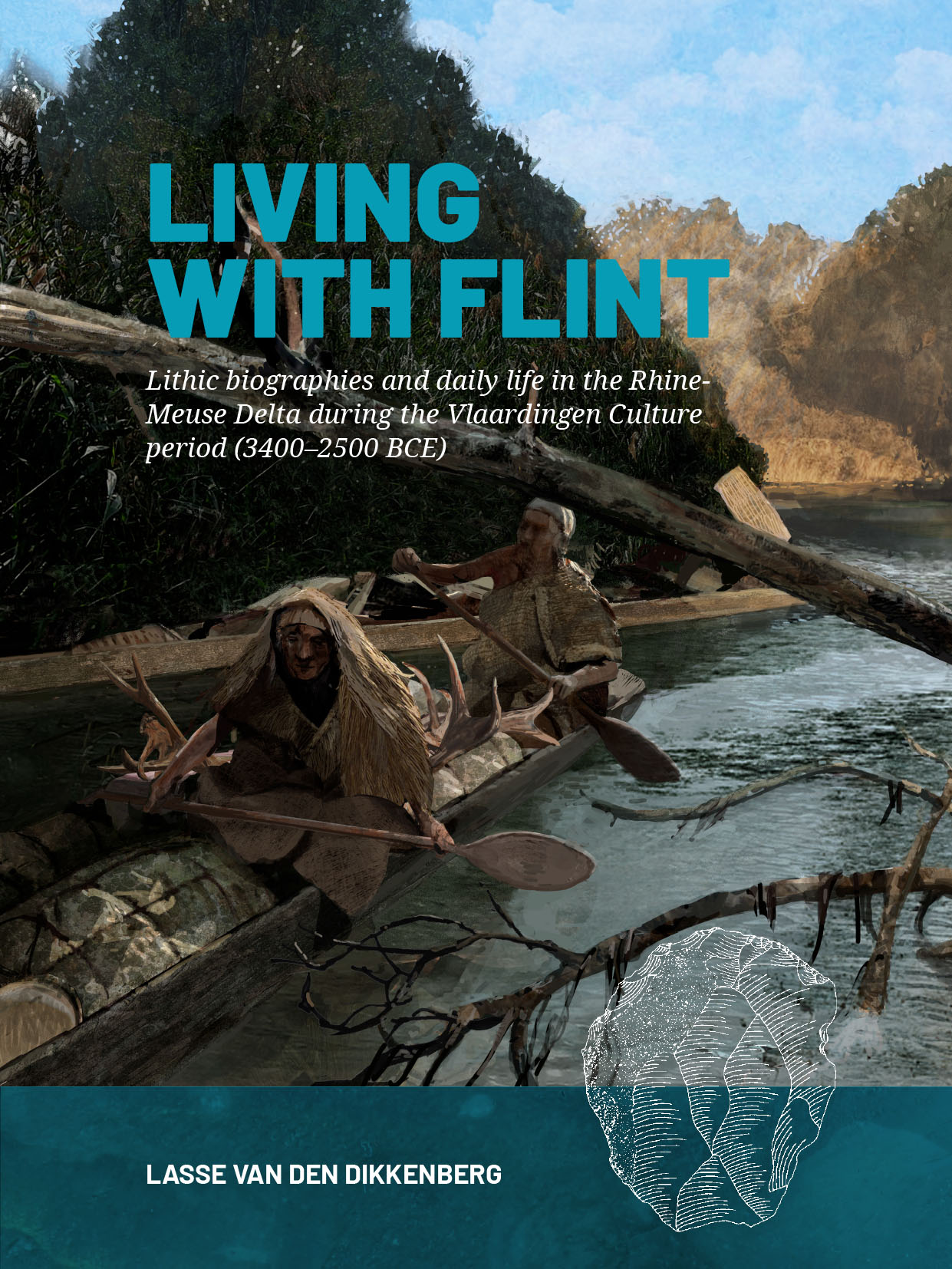
Living with Flint
Lithic biographies and daily life in the Rhine-Meuse Delta during the Vlaardingen Culture period (3400–2500 BCE)
Lasse van den Dikkenberg | 2026
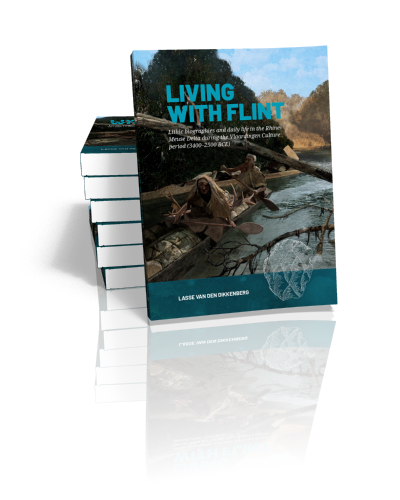
Living with Flint
Lithic biographies and daily life in the Rhine-Meuse Delta during the Vlaardingen Culture period (3400–2500 BCE)
Lasse van den Dikkenberg | 2026
Paperback ISBN: 9789464281293 | Hardback ISBN: 9789464281309 | Imprint: Sidestone Press Dissertations | Format: 210x280mm | 280 pp. | Language: English | 40 illus. (bw) | 98 illus. (fc) | Keywords: neolithic; European prehistory; Vlaardingen culture; use-wear analysis; object biographies; flint; wetlands; settlement archaeology; experimental archaeology | download cover | DOI: 10.59641/r2u8o9p0q1 | CC-license: CC BY 4.0
Read online or downloaded 763 times
-
Digital & Online access
This is a full Open Access publication, click below to buy in print, browse, or download for free.
-
Buy via Sidestone (EU & UK)
-
Buy via our Distributors (WORLD)
For non-EU or UK destinations you can buy our books via our international distributors. Although prices may vary this will ensure speedy delivery and reduction in shipping costs or import tax. But you can also order with us directly via the module above.
UK international distributor
USA international distributor
-
Bookinfo
Paperback ISBN: 9789464281293 | Hardback ISBN: 9789464281309 | Imprint: Sidestone Press Dissertations | Format: 210x280mm | 280 pp. | Language: English | 40 illus. (bw) | 98 illus. (fc) | Keywords: neolithic; European prehistory; Vlaardingen culture; use-wear analysis; object biographies; flint; wetlands; settlement archaeology; experimental archaeology | download cover | DOI: 10.59641/r2u8o9p0q1 | CC-license: CC BY 4.0
Read online or downloaded 763 times
We will plant a tree for each order containing a paperback or hardback book via OneTreePlanted.org.
Our understanding of prehistoric life is shaped to a large degree by the study of stone tools. Their exceptional preservation makes flint tools ideally suited to reconstruct past lifeways. Use-wear analysis provides insights into the role of the ‘missing majority’ of perishable organic materials such as hide, wood, and plant fibres in past technologies. Reconstructing lithic biographies, from raw material procurement to use and recycling, reveals the complex dynamics of prehistoric life.
This book explores the lifeways of Vlaardingen Culture communities (3400-2500 BCE) in the Rhine-Meuse-Scheldt delta through the lens of such object biographies. A detailed study of flint assemblages from four key sites reconstructs past exchange networks, technological choices, and everyday activities. Flint was imported across considerable distances, often as finished tools such as polished axes. Once acquired, exotic material was fully appropriated and integrated into the local technological system. Use-wear evidence further reveals the emergence of part-time craft specialisation during the Vlaardingen Culture period.
Finally, the experimental research and use-wear analyses offer new insights into life in the delta, providing the earliest evidence in the Netherlands for the use of horn in craft production. These findings illuminate how communities lived and interacted in the dynamic wetland environment of the delta.
Part I: An Introduction to Vlaardingen Flint Biographies
1 Living with flint in the Neolithic wetlands
1.1 The project: Putting Life into Late Neolithic houses
1.2 Research questions and case studies
1.3 Roadmap through the book
1.4 Data availability
2 The Vlaardingen Culture
2.1 Research history
2.2 Chronology of the Vlaardingen Culture
2.3 The Neighbours
2.4 Landscape and subsistence
2.5 Flint in the Vlaardingen Culture
3 Object biographies and communities
3.1 A biographical approach
3.2 Direct procurement or down-the-line exchange
3.3 Cultural appropriation of material culture
3.4 Taskscapes
3.5 Communities of practice
3.6 Craft specialisation
4 Sources, techniques and use-wear analysis
4.1 Sourcing flint and ED-XRF analysis
4.2 Technological analysis of lithics
4.3 Use-wear analysis
4.4 Experimental archaeology
4.5 Computer programs
Part II: Biographies of Vlaardingen Culture flint
5 Experiments
5.1 How to finish your Neolithic axe?
5.2 Making leather from seal skin
5.3 Scraping salmon skins
5.4 The unusual suspects: hide working with axes
5.5 Experiments with horn
5.6 Recycling Neolithic axes
5.7 Concluding remarks
6 The coastal dune site of Den Haag Steynhof
6.1 Excavation and landscape setting
6.2 Features, finds, and material selection
6.3 Flint preservation
6.4 Flint procurement
6.5 Flint technology
6.6 Results of the use-wear analysis
6.7 Discussion and conclusion
7 Pioneers and hide-workers on the coastal dunes
7.1 The site of Den Haag Wateringse Binnentuinen
7.2 An axe from the site of Den Haag Gavi Kavel
7.3 The site of Den Haag Noordweg 76
8 The site of Hekelingen III: Life on the levees
8.1 Excavation and landscape setting
8.2 Material selection
8.3 Flint procurement
8.4 Flint technology
8.5 Results of the use-wear analysis
8.6 Discussion and conclusion
9 The site of Vlaardingen Arij Koplaan
9.1 Excavation and landscape setting
9.2 Features at the site and material selection
9.3 Flint preservation
9.4 Flint procurement
9.5 Flint technology
9.6 Flint typology
9.7 Results of the use-wear analysis of flint from trench 11 and 16
9.8 Results of the use-wear analysis of trench 15
9.9 Results of the use-wear analysis of trench 17
9.10 Discussion
10 Zandwerven
10.1 Excavation and landscape setting
10.2 Settlement type
10.3 Features at the site and material selection
10.4 Sieved shell sample
10.5 Preservation
10.6 Procurement
10.7 Technology
10.8 Typology
10.9 Results of the use-wear analyses
10.10 Discussion and conclusion
Part III: Living with flint in the Rhine-Meuse delta
11 Networking and sourcing during the Vlaardingen Culture period
11.1 Diversity in sources
11.2 Down the line exchange or direct procurement
11.3 Collecting flint nodules or importing finished products?
11.4 Appropriation of exotic flint
11.5 Taskscapes
11.6 Looking ahead
12 The technological system
12.1 Lithic technologies
12.2 Domestic life in the wetlands
12.3 A complex network of specialised communities
13 Communities of practice during the Vlaardingen Culture period
13.1 The Vlaardingen Culture, life in the wetlands
13.2 Social boundaries and interactions with the Funnel Beaker Culture
13.3 Openness and interactions with the Corded Ware Culture
13.4 Pluriform Vlaardingen Culture sites
14 Synthesis
14.1 Lessons from the experiments
14.2 Sourcing flint
14.3 Living with flint in the Rhine-Meuse delta
14.4 A lithic perspective on the Vlaardingen Culture
14.5 Methodological reflections
Appendices
Bibliography
Acknowledgements

Dr. Lasse van den Dikkenberg
Lasse van den Dikkenberg was born in Zeist in 1993. In 2016 he completed his bachelor’s degree with a thesis on the reuse of urnfields in the southern Netherlands. He completed his Research Master’s thesis cum laude under the supervision of Prof. Dr. David Fontijn, analysing Middle Iron Age burial rituals in the southern Netherlands, Flanders, and the German Rhineland. In 2021 he started his PhD trajectory as part of the Putting Life into Late Neolithic Houses project, headed by Prof. Dr. Annelou van Gijn. He also worked as a microwear specialist in commercial projects, analysing flint tools from Mesolithic and Neolithic excavations in the Netherlands.

Van den Dikkenberg, L. (2026). Living with Flint. Lithic biographies and daily life in the Rhine-Meuse Delta during the Vlaardingen Culture period (3400–2500 BCE). Sidestone Press. https://doi.org/10.59641/r2u8o9p0q1
Abstract:
Our understanding of prehistoric life is shaped to a large degree by the study of stone tools. Their exceptional preservation makes flint tools ideally suited to reconstruct past lifeways. Use-wear analysis provides insights into the role of the ‘missing majority’ of perishable organic materials such as hide, wood, and plant fibres in past technologies. Reconstructing lithic biographies, from raw material procurement to use and recycling, reveals the complex dynamics of prehistoric life.
This book explores the lifeways of Vlaardingen Culture communities (3400-2500 BCE) in the Rhine-Meuse-Scheldt delta through the lens of such object biographies. A detailed study of flint assemblages from four key sites reconstructs past exchange networks, technological choices, and everyday activities. Flint was imported across considerable distances, often as finished tools such as polished axes. Once acquired, exotic material was fully appropriated and integrated into the local technological system. Use-wear evidence further reveals the emergence of part-time craft specialisation during the Vlaardingen Culture period.
Finally, the experimental research and use-wear analyses offer new insights into life in the delta, providing the earliest evidence in the Netherlands for the use of horn in craft production. These findings illuminate how communities lived and interacted in the dynamic wetland environment of the delta.
Contents
Part I: An Introduction to Vlaardingen Flint Biographies
1 Living with flint in the Neolithic wetlands
1.1 The project: Putting Life into Late Neolithic houses
1.2 Research questions and case studies
1.3 Roadmap through the book
1.4 Data availability
2 The Vlaardingen Culture
2.1 Research history
2.2 Chronology of the Vlaardingen Culture
2.3 The Neighbours
2.4 Landscape and subsistence
2.5 Flint in the Vlaardingen Culture
3 Object biographies and communities
3.1 A biographical approach
3.2 Direct procurement or down-the-line exchange
3.3 Cultural appropriation of material culture
3.4 Taskscapes
3.5 Communities of practice
3.6 Craft specialisation
4 Sources, techniques and use-wear analysis
4.1 Sourcing flint and ED-XRF analysis
4.2 Technological analysis of lithics
4.3 Use-wear analysis
4.4 Experimental archaeology
4.5 Computer programs
Part II: Biographies of Vlaardingen Culture flint
5 Experiments
5.1 How to finish your Neolithic axe?
5.2 Making leather from seal skin
5.3 Scraping salmon skins
5.4 The unusual suspects: hide working with axes
5.5 Experiments with horn
5.6 Recycling Neolithic axes
5.7 Concluding remarks
6 The coastal dune site of Den Haag Steynhof
6.1 Excavation and landscape setting
6.2 Features, finds, and material selection
6.3 Flint preservation
6.4 Flint procurement
6.5 Flint technology
6.6 Results of the use-wear analysis
6.7 Discussion and conclusion
7 Pioneers and hide-workers on the coastal dunes
7.1 The site of Den Haag Wateringse Binnentuinen
7.2 An axe from the site of Den Haag Gavi Kavel
7.3 The site of Den Haag Noordweg 76
8 The site of Hekelingen III: Life on the levees
8.1 Excavation and landscape setting
8.2 Material selection
8.3 Flint procurement
8.4 Flint technology
8.5 Results of the use-wear analysis
8.6 Discussion and conclusion
9 The site of Vlaardingen Arij Koplaan
9.1 Excavation and landscape setting
9.2 Features at the site and material selection
9.3 Flint preservation
9.4 Flint procurement
9.5 Flint technology
9.6 Flint typology
9.7 Results of the use-wear analysis of flint from trench 11 and 16
9.8 Results of the use-wear analysis of trench 15
9.9 Results of the use-wear analysis of trench 17
9.10 Discussion
10 Zandwerven
10.1 Excavation and landscape setting
10.2 Settlement type
10.3 Features at the site and material selection
10.4 Sieved shell sample
10.5 Preservation
10.6 Procurement
10.7 Technology
10.8 Typology
10.9 Results of the use-wear analyses
10.10 Discussion and conclusion
Part III: Living with flint in the Rhine-Meuse delta
11 Networking and sourcing during the Vlaardingen Culture period
11.1 Diversity in sources
11.2 Down the line exchange or direct procurement
11.3 Collecting flint nodules or importing finished products?
11.4 Appropriation of exotic flint
11.5 Taskscapes
11.6 Looking ahead
12 The technological system
12.1 Lithic technologies
12.2 Domestic life in the wetlands
12.3 A complex network of specialised communities
13 Communities of practice during the Vlaardingen Culture period
13.1 The Vlaardingen Culture, life in the wetlands
13.2 Social boundaries and interactions with the Funnel Beaker Culture
13.3 Openness and interactions with the Corded Ware Culture
13.4 Pluriform Vlaardingen Culture sites
14 Synthesis
14.1 Lessons from the experiments
14.2 Sourcing flint
14.3 Living with flint in the Rhine-Meuse delta
14.4 A lithic perspective on the Vlaardingen Culture
14.5 Methodological reflections
Appendices
Bibliography
Acknowledgements
Dr. Lasse van den Dikkenberg
Lasse van den Dikkenberg was born in Zeist in 1993. In 2016 he completed his bachelor’s degree with a thesis on the reuse of urnfields in the southern Netherlands. He completed his Research Master’s thesis cum laude under the supervision of Prof. Dr. David Fontijn, analysing Middle Iron Age burial rituals in the southern Netherlands, Flanders, and the German Rhineland. In 2021 he started his PhD trajectory as part of the Putting Life into Late Neolithic Houses project, headed by Prof. Dr. Annelou van Gijn. He also worked as a microwear specialist in commercial projects, analysing flint tools from Mesolithic and Neolithic excavations in the Netherlands.
-
Digital & Online access
This is a full Open Access publication, click below to buy in print, browse, or download for free.
-
Buy via Sidestone (EU & UK)
-
Buy via our Distributors (WORLD)
For non-EU or UK destinations you can buy our books via our international distributors. Although prices may vary this will ensure speedy delivery and reduction in shipping costs or import tax. But you can also order with us directly via the module above.
UK international distributor
USA international distributor
- Browse all books by subject
-
Search all books
We will plant a tree for each order containing a paperback or hardback book via OneTreePlanted.org.
You might also like:



© 2026 Sidestone Press KvK nr. 28114891 Privacy policy Sidestone Newsletter Terms and Conditions (Dutch)