


Decolonial Futures for Amazonian and Andean Anthropologies
Edited by Sonia Alconini, Kylie Quave & George Mentore | Forthcoming
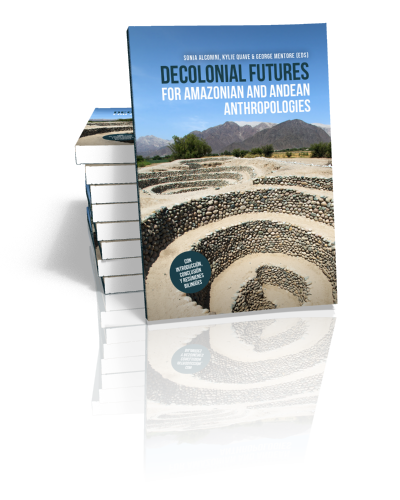
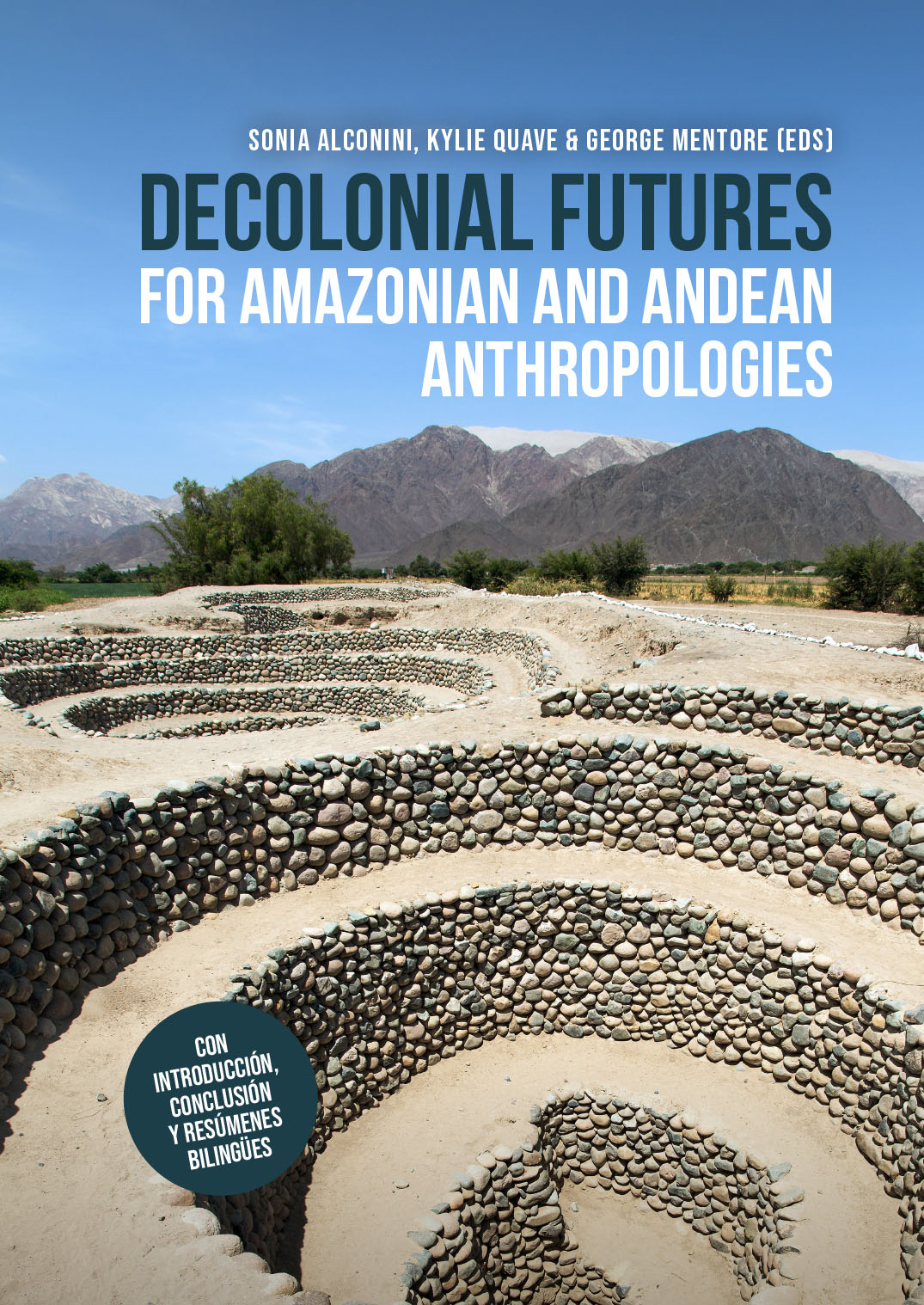
Decolonial Futures for Amazonian and Andean Anthropologies
Edited by Sonia Alconini, Kylie Quave & George Mentore | Forthcoming
Paperback ISBN: 9789464271805 | Hardback ISBN: 9789464271812 | Imprint: Sidestone Press Academics | Format: 182x257mm | ca. 150 pp. | Language: English | 13 illus. (bw) | 13 illus. (fc) | Keywords: decolonial anthropologies; indigenous archaeologies; Latin American archaeology; Andes; Amazon | download cover | DOI: 10.59641/p6s2m3n4o5 | CC-license: CC BY-NC-ND 4.0
Publication date: 17-12-2026
-
Digital & Online access
Digital/Online version not (yet) available
-
Buy via Sidestone (EU & UK)
Get €5.00 discount on forthcoming books by using coupon code "PRE-ORDER" in your shopping cart!
-
Buy via our Distributors (WORLD)
For non-EU or UK destinations you can buy our books via our international distributors. Although prices may vary this will ensure speedy delivery and reduction in shipping costs or import tax. But you can also order with us directly via the module above.
For UK & other International destinations
For USA/Canada & other International destinations
-
Bookinfo
Paperback ISBN: 9789464271805 | Hardback ISBN: 9789464271812 | Imprint: Sidestone Press Academics | Format: 182x257mm | ca. 150 pp. | Language: English | 13 illus. (bw) | 13 illus. (fc) | Keywords: decolonial anthropologies; indigenous archaeologies; Latin American archaeology; Andes; Amazon | download cover | DOI: 10.59641/p6s2m3n4o5 | CC-license: CC BY-NC-ND 4.0
Publication date: 17-12-2026
We will plant a tree for each order containing a paperback or hardback book via OneTreePlanted.org.
This volume explores the futures and possibilities of engaged anthropological research for and with indigenous communities. Collectively, the authors, including anthropologists and archaeologists working in the Andes and Amazon, argue that to develop sustainable and more just futures for everyone, it is critical to integrate indigenous forms of knowledge into engaged, multidisciplinary research.
The contributions examine the challenges of resource extraction and land dispossession in the Andes and the Amazon, the marginalization of indigenous voices in the reconstruction of their pasts, and the challenges of integrating local knowledge into education initiatives. Ultimately, this collection advocates for decolonial, activist-oriented praxis and research methodologies that center marginalized knowledge systems and more-than-human worlds to challenge enduring colonial legacies
Este volumen explora futuros decoloniales para la investigación antropológica comprometida con comunidades indígenas en los Andes y la Amazonía. Defiende la integración de conocimientos indígenas, metodologías activistas y perspectivas más-que-humanas para confrontar legados coloniales. La introducción y la conclusión se ofrecen también en español, y todos los capítulos incluyen resúmenes en español o en portugués.
Foreword: The Predicament of Modern Subjectivity and the Liberating Factor of Indigenous Well-Being (An Address Delivered at the Eighth Biennial Meeting of the SAAS, 2024)
George Mentore
Introduction
Introducción en traducción
Sonia Alconini and Kylie Quave
Huni Kuin Celebrations for Life Proliferation vs. Settler Conservation: Notes to reimagine environmental conservation
Giancarlo Rolando
The Castanheira and the Standing Forest: (Re)making meaningfulness through indigenous historical narratives in the southwest Amazon
Juliana Salles Machado, Roseline Mezacasa, Carolina Aragon, Myrtle Shock, Natanael Pabikãr Suruí, Lucas Carminati, and André Braga Junqueira
Epistemological Metaphors of the Female Body in the Andean Landscape: The case of the Nasca hyper-arid landscape and its aqueducts
Sofía Chacaltana Cortez
Indigenous Archaeology? Experiencing and living the past together
Sonia Alconini, Christian Cancho, and Juan Carlos Chavez
Collaborative Praxis in Archaeology: Insights from indigenous territories of the Llanos de Moxos
Carla Jaimes Betancourt
Archaeology in Brazilian Amazonia: challenges, contradictions, and horizons in the new millennium
Bruna Cigaran da Rocha
Concluding Remarks: Transformational futures for anthropologies of the Amazon and Andes
Palabras finales en traducción
Kylie Quave and Sonia Alconini
Prof. Dr. Sonia Alconini
Sonia Alconini (David A. Harrison III Professor of American Archaeology) is a Bolivian archaeologist who currently teaches at the University of Virginia. Multidisciplinary in nature, her research draws from archaeology and ethnohistory to assess the materiality of colonial encounters and the mechanics of ancient imperialism. All this research has materialized in several books and volumes, including articles and book chapters in English, Spanish, and Quechua.

Dr. Kylie Quave
Kylie Quave is an anthropological archaeologist and writing faculty at the George Washington University. She studies the contributions of marginalized peoples to the development of states and empires. She specifically conducts research in the heartland of the former Inka empire in the South American Andes (11th to 18th centuries in Cusco, Perú), comparing the daily lives of forcibly resettled ethnic groups and the rural communities that were excluded from imperial society. She has recently authored articles in Journal of Field Archaeology; American Anthropologist; Food, Society, & Culture; Journal of Archaeology & Education; and Antiquity.
Dr. George Mentore
George Mentore (University of Virginia) is a cultural anthropologist whose research interests are in Amazonian and Caribbean studies and the anthropology of knowledge. He is the author of Of Passionate Curves and Desirable Cadences: Themes on Waiwai Social Being (University of Nebraska Press, 2005), and Abandoned People, Madness, and the Untranslatable (Centre for Amerindian, Latin American and Caribbean Studies, University of St. Andrews Occasional Publications No.32, 2011).
Alconini, S., Quave, K., & Mentore, G. (Eds.). (in press). Decolonial Futures for Amazonian and Andean Anthropologies. Sidestone Press. https://doi.org/10.59641/p6s2m3n4o5
Abstract:
This volume explores the futures and possibilities of engaged anthropological research for and with indigenous communities. Collectively, the authors, including anthropologists and archaeologists working in the Andes and Amazon, argue that to develop sustainable and more just futures for everyone, it is critical to integrate indigenous forms of knowledge into engaged, multidisciplinary research.
The contributions examine the challenges of resource extraction and land dispossession in the Andes and the Amazon, the marginalization of indigenous voices in the reconstruction of their pasts, and the challenges of integrating local knowledge into education initiatives. Ultimately, this collection advocates for decolonial, activist-oriented praxis and research methodologies that center marginalized knowledge systems and more-than-human worlds to challenge enduring colonial legacies
Este volumen explora futuros decoloniales para la investigación antropológica comprometida con comunidades indígenas en los Andes y la Amazonía. Defiende la integración de conocimientos indígenas, metodologías activistas y perspectivas más-que-humanas para confrontar legados coloniales. La introducción y la conclusión se ofrecen también en español, y todos los capítulos incluyen resúmenes en español o en portugués.
Contents
Foreword: The Predicament of Modern Subjectivity and the Liberating Factor of Indigenous Well-Being (An Address Delivered at the Eighth Biennial Meeting of the SAAS, 2024)
George Mentore
Introduction
Introducción en traducción
Sonia Alconini and Kylie Quave
Huni Kuin Celebrations for Life Proliferation vs. Settler Conservation: Notes to reimagine environmental conservation
Giancarlo Rolando
The Castanheira and the Standing Forest: (Re)making meaningfulness through indigenous historical narratives in the southwest Amazon
Juliana Salles Machado, Roseline Mezacasa, Carolina Aragon, Myrtle Shock, Natanael Pabikãr Suruí, Lucas Carminati, and André Braga Junqueira
Epistemological Metaphors of the Female Body in the Andean Landscape: The case of the Nasca hyper-arid landscape and its aqueducts
Sofía Chacaltana Cortez
Indigenous Archaeology? Experiencing and living the past together
Sonia Alconini, Christian Cancho, and Juan Carlos Chavez
Collaborative Praxis in Archaeology: Insights from indigenous territories of the Llanos de Moxos
Carla Jaimes Betancourt
Archaeology in Brazilian Amazonia: challenges, contradictions, and horizons in the new millennium
Bruna Cigaran da Rocha
Concluding Remarks: Transformational futures for anthropologies of the Amazon and Andes
Palabras finales en traducción
Kylie Quave and Sonia Alconini
Prof. Dr. Sonia Alconini
Sonia Alconini (David A. Harrison III Professor of American Archaeology) is a Bolivian archaeologist who currently teaches at the University of Virginia. Multidisciplinary in nature, her research draws from archaeology and ethnohistory to assess the materiality of colonial encounters and the mechanics of ancient imperialism. All this research has materialized in several books and volumes, including articles and book chapters in English, Spanish, and Quechua.
Dr. Kylie Quave
Kylie Quave is an anthropological archaeologist and writing faculty at the George Washington University. She studies the contributions of marginalized peoples to the development of states and empires. She specifically conducts research in the heartland of the former Inka empire in the South American Andes (11th to 18th centuries in Cusco, Perú), comparing the daily lives of forcibly resettled ethnic groups and the rural communities that were excluded from imperial society. She has recently authored articles in Journal of Field Archaeology; American Anthropologist; Food, Society, & Culture; Journal of Archaeology & Education; and Antiquity.
Dr. George Mentore
George Mentore (University of Virginia) is a cultural anthropologist whose research interests are in Amazonian and Caribbean studies and the anthropology of knowledge. He is the author of Of Passionate Curves and Desirable Cadences: Themes on Waiwai Social Being (University of Nebraska Press, 2005), and Abandoned People, Madness, and the Untranslatable (Centre for Amerindian, Latin American and Caribbean Studies, University of St. Andrews Occasional Publications No.32, 2011).
-
Digital & Online access
Digital/Online version not (yet) available
-
Buy via Sidestone (EU & UK)
Get €5.00 discount on forthcoming books by using coupon code "PRE-ORDER" in your shopping cart!
-
Buy via our Distributors (WORLD)
For non-EU or UK destinations you can buy our books via our international distributors. Although prices may vary this will ensure speedy delivery and reduction in shipping costs or import tax. But you can also order with us directly via the module above.
For UK & other International destinations
For USA/Canada & other International destinations
- Browse all books by subject
-
Search all books
We will plant a tree for each order containing a paperback or hardback book via OneTreePlanted.org.
You might also like:



© 2026 Sidestone Press KvK nr. 28114891 Privacy policy Sidestone Newsletter Terms and Conditions (Dutch)